

Why An Insurance Broker Should Be A Key Member Of Your Multifamily Team With J.T. Lynch
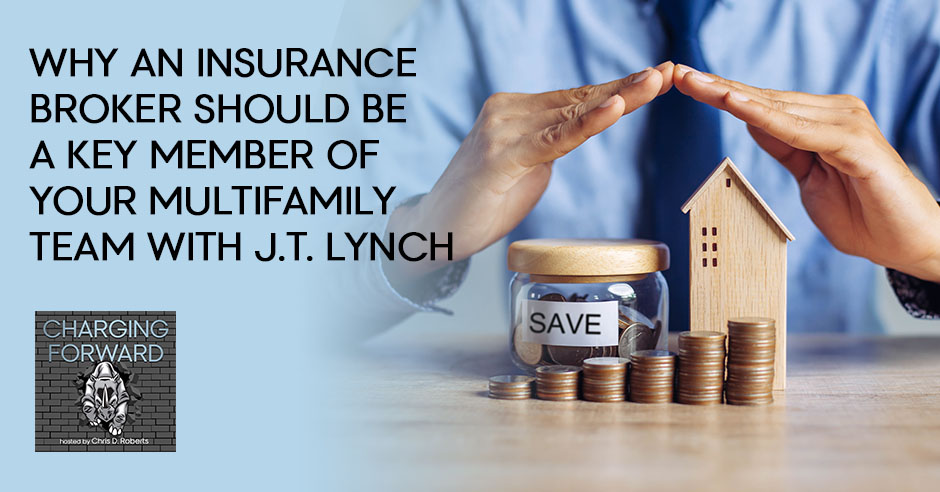
An insurance broker is one person that you want in your multifamily team. They provide property coverage, general liability, and umbrella coverage. Before you start doing deals, it’s best to form the right team first, and an insurance broker is a no-brainer. Join your host Chris D. Roberts and his guest J.T. Lynch as they talk about the insurance industry. J.T. is a commercial insurance broker with Ramey & King Insurance. He believes in networking and forming strong bonds with your clients. Listen in as Chris and J.T. tackle the insurance industry with real estate head-on! Also, discover why building relationships is the most important thing when talking to clients.
—
Listen to the podcast here:
Why An Insurance Broker Should Be A Key Member Of Your Multifamily Team With J.T. Lynch
We are with JT Lynch with Ramey King Insurance. JT, welcome.
Thanks for having me. This is awesome. I’m so happy to be here and happy to help out your audience as well.
We’re looking forward to deep diving into the insurance world and what makes JT tick. JT, we want to know what you attribute to your success? What I mean by that is what you define as success. What is something that you attribute to achieving a level of success in your life? It could be personal or professional.
I think it probably started, I remember, in high school. My dad would have me do work in the summer and it was never like sacking groceries. It was always baling hay, doing roof jobs and stuff like that. Now, I realize why I did it because this is where you go to school and get a good education, get a good job, and don’t have to do that again. Baling hay in the summer in Texas is no fun at all. Especially when you realize you get paid $0.17 a bale and they’re 130 pounds. It’s ridiculous. One of my first job out of college, I moved back home. I got a job in a call center.
Sales were not for me, for sure, but I was, “I’ll do this until I find something else.” There were guys in there that had been selling for many years. How am I supposed to compete with these guys? I told myself, “They’ve been in it longer. They know all the tricks, but they’re not going to outwork me.” That’s how I put my mindset forward, too is, “I’m going to work harder than everybody else,” and I did. Eventually, I got up to where those guys were and here I am now. It continues to move forward and if you start a trend of that mindset every day, then it helps everything in your life and I think you’re probably similar too.
This is an important piece of information. Charging Forward crew, what I want you to take away from that, and is whatever background you have, pedigree, the mindset you have, if you start with, “No one’s going to outwork me,” you will have some form of success eventually. It’s funny because I used to say, “I will work as though someone is trying to take my job,” like someone’s coming up from behind to take away what I’ve built, earned and I’m not going to allow that to happen. That’s a very simple thing to say, but no one will catch you if you implement those tools every day. If they do, they’ve earned it, but it’s not likely. JT, that is a good nugget of knowledge. We appreciate that.
God will put signs in front of you, but you have to be open-minded enough to see them.
You mentioned baling hay. I can’t even imagine. I tried to lift a bale of hay once and it was ugly. Let me tell you because those are heavy. You must be a pretty strong guy. Tell the audience a little bit about your journey from there and how you ended up in the insurance business and maybe let’s do a little deep dive there.
I worked at a call center and that environment is such a beating. It’s call after call. You can’t leave your desk because calls are coming in. Sometimes, it’s hard to quantify. I want to work harder than everyone else. It depends on what you’re doing. That may be hard to justify. Like, “How would I do that? Do I send more emails to everybody?” Luckily for me being in a call center setting, it was very simple. They can make this amount of money off of 50 calls. To beat them, I’m going to do 100 calls, but I learned more because I talked to more people. I had more opportunities and eventually, you catch up to them because you’re practicing more. Plus, the volume helps tremendously in that type of setting.
I remember, you get your breaks and you go outside in the parking lot. There’s this group over here smoking and complaining about their job and stuff like that. I found myself gravitating to that group more. Finally, I was thinking, “This doesn’t help me. I may not want to be here. This may not be exactly what I want to do, but this isn’t a positive thing for me and I need to figure things out.” Finally, I noticed that newer people who came on board started gravitating towards me and asking me how I was doing things because I was successful. I found out that I liked helping them.
I decided, “I’m going to get into management here rather than be outside with the smokers. I’ll get into a better position,” and so I did. I worked my way up and made myself into the leadership of the year. It was great. From there, a branch in Houston needed a sales manager, so I moved down to Houston. We were doing door-to-door sales at that time, which I had never done but had the same mindset, “I’ll work harder than everybody. My team will knock on more doors. We’ll have more opportunities.” I ended up turning that into the best branch in the region. We increased sales, pre-pays per sale and all that.
Dumb luck, I didn’t update my LinkedIn profile and a company found me and interviewed me, but they thought I still lived in Dallas. Finally, I told him like, “I’m in Houston,” so they offered me a job. I was like, “Can you pay to relocate me?” They go, “We can do that.” If I had changed my LinkedIn profile to say, “I lived in Houston,” they wouldn’t have even called me because they were looking for someone in Dallas. Procrastination paid off. They were sales jobs. I was a manager for a team and we were selling electricity, so different electricity plans. That was great. Unfortunately, they ended up moving all their branches out of Texas. They’re an Ohio-based company.
Doing door to door is challenging. If you can do that, you can do anything. If you can go door to door and make sales in Texas in the heat, you could do anything. At that point in time, I told my wife. I think we had a five-year-old at the time. I said, “The hours are crazy. We had to work weekends.” I was making good money. I was probably making $90,000 to $100,00 a year. I was thinking about going into that with another company, but with the hours, it’s like, “If I’m going to change, I need to do it now.” I chose to go into the insurance industry at that time, starting over but better hours and all that. I went to Personal Lines at Liberty Mutual.

Insurance Broker: When people think of sales, most of the time, they think of the sleazy used car salesman. You don’t have to be that person. You just need to know how to talk and build relationships with people.
I hated personal lines. It’s like bugging your friends and family all the time. You’ve got to get ten sales a week to even be successful. It’s funny, I was looking to buy a farmer’s agency myself and I was excited about that. With my recruiter and the numbers, that didn’t add up from what they initially told me. I was bummed out about that. I thought about going home and drinking a beer and drowning my sorrows away. I’m like, “What am I going to do now?” I had on my calendar to go to this event to Meetup with a bunch of realtors. I said, “This event’s in a brewery. I’ll go meet with some realtors and I’ll drink a beer there. What could hurt?”
I go. I sit down. I start talking to the guy next to me and he’s my boss now who owns this agency, Ramey King. Telling him my story and he goes, “You sound like you need to be in commercial lines. Give me a call tomorrow. We’ll have a beer and we’ll talk more about it.” Here I am. It goes to show you that I’m a big believer in signs. God will put signs in front of you, but you have to be open-minded enough to see them and realize that what you think is bad is turning you possibly in a better direction.
If I would’ve said, “This sucks,” and ended up buying a farmer’s agency, I might not have liked it. Instead, I realized that wasn’t the direction I wanted to go and followed through with my commitments to go to that Meetup, then here I am. Follow the signs and you’ll get there. You’ll never know who you meet and what you’ll find out. Go talk to people, get used to uncomfortable situations so they don’t be so uncomfortable and you can take it from there.
It’s interesting, JT, because we talked to a lot of people about their entrepreneurial journeys. Many people start off in some form of a sales career. It could be as early as doing your paper route. We used to put papers and newspapers in these baskets and ride around and throw them on people’s doors for some of you who don’t know what a paper route is. On the weekends, you’d have to go try to sell these subscriptions to people door to door. Oftentimes, your rewards would be candy or video games or whatever it may be in this warehouse space in the back of the newspaper place where they manufactured them. Those things build a lot of character very early on and they get you out of your comfort zone.
I think one of the things you said, which I go back to, is baling hay. That’s hard work. You can’t complain to dad because you’re going to be looked at like you’re a wuss. It’s like, “I got to keep baling and I can’t even move.” Soon you get used to embracing the suck, like the Navy SEALs say and so, you got to keep going. What’s interesting is you pivoted to an insurance career which you wouldn’t look at as, let’s say, necessarily a sales career, but you developed a personality that catered to lots of people and lots of environments because of your early upbringing. That sets you up for some success in the insurance industry and you happened to find something that worked for you and you built upon that success.
Going way back, I used to be the shyest kid ever. I’m single. I don’t have any siblings. I’m an only child. I was in theater in my freshman year of high school and I was in Grease. I signed up to do a solo in Grease. Like the shyest kid ever is now doing a solo on stage. Football coaches are laughing at me and stuff, but I did pretty well and they were impressed. Get in those uncomfortable situations now. I could talk in front of a whole group of people and it would be fine. Unscripted or whatever, it doesn’t matter. I still get nervous, but I realize that it’s not that big a deal.
What you think is bad can possibly turn you in a better direction.
You’re going to teach the people in the audience whether you think you don’t know that much about the subject anyway. You know a lot more than the people in the audience and they’re there to listen to you. Once you get out of your comfort zone so often, then it becomes a lot easier. More people are afraid of public speaking than dying. People aren’t afraid of dying, but they’re afraid of public speaking. You have to force yourself to get out of that comfort zone and then it becomes a lot easier. As you said with sales, I would encourage everyone to have a sales job at some point in their life because you’re going to use those skills all the time.
When people think of sales, they think of sleazy used car salesmen most of the time. You don’t have to be that person. All you have to do is learn how to develop relationships, talk with people, figure out what their needs and wants are, and then provide that product for them using those needs and wants. It’s easier said than done, I guess, but ultimately, that’s what you’re doing and it doesn’t have to be sleazy. The sleazy guys are the ones that aren’t good at it. If you’re good at it, it’s natural like you’re talking to your friends.
The takeaway here is you learn how to sell without selling. It’s like, “I’m trying to educate. I’m trying to help. I’m trying to fill a need for you. Hopefully, I earn your business when it’s all said and done.” It sets the tone for a very successful communication skill set that you can take to any field. As you said, it breaks down those walls of being uncomfortable. It opens up your mind. It puts you in the know. You touched on something interesting, which is about, “I’m more of an expert than they are,” and there’s comfort in that. Someone used to tell me back in the day when I first started a sales career many years ago. They said, “Don’t worry so much about the price because I would fixate on like $4.99 and $0.77 or whatever.” He’s like, “It’s too hard to learn all that.”
You’re the only one that knows the price is wrong. It’s like, “Don’t worry so much about $0.50 a dollarust build the value and eventually, people will see value in you. You’ll hopefully earn their business. I highlight that because, to your point, that sets the tone for good communication and builds up your confidence. Now, you’re in the insurance business, but you could be in any business because you can take those skills all over the place with you, right?
Yeah. A lot of people got sales skills. They only don’t realize they’re using it every day. Think about it, I say, “Chris, you got to go see this new movie.” “I heard it wasn’t that good.” “No, I’m telling you. You got to go see it. It’s got this and you go here. You can eat there.” Some people do this all the time and then they go, “I’m not a salesman.” It’s like, “You’re selling people all the time.” If you could use that power, if you will, in your everyday life, then you’d be successful, but people don’t think of it like that because they’re talking to strangers. Talk to that stranger as if it’s your friend, then it’s easy. You’re doing it every day anyway.
JT, what don’t you tell us a little bit about what you do exactly and how it benefits the real estate industry? We have some history and I know a little bit about you, but we were want to share your process and how you go about setting people up. Maybe some of the pitfalls challenge that people might see. Maybe tell us a wild story if you got one. Why don’t you want to tell us a bit about exactly what you do?

Insurance Broker: Get your team together first, know what you’re looking for, and then attack the deals. Don’t go finding deals first, and then try to put your team together. That’ll put you behind the eight ball.
I’m an Insurance Broker with Ramey King. We’re located in Denton, Texas. That’s North of Dallas, but we’re licensed nationwide. It’s interesting to see the different situations in different regions, states and even in different cities within the state. Each post has different issues with insurance. It’s pretty neat because nothing’s ever the same. Every property’s a little bit different. Every area is going to be different. I liked the challenge in that. If I’m working in an environment where everything’s the same, no. I can’t do that. It’s got to bring a challenge to me.
Most of the time, Chris, I spend networking. I probably do. It’s weird saying this, but COVID helped me tremendously because it opened up all these Zoom meetings. We were doing different Meetups to meet investors here in Dallas, but you can only do so many. Sometimes you go to them and there are only twelve people and I already know ten of them. It’s a beating, but then when Zoom opened up, now I’m meeting 100 people on a Zoom and they’re located all over the country, which I wouldn’t have met them otherwise.
Now, most of the time, I’m spending on either Zoom meetings or social media connecting with people, seeing what projects are in and how I can help them. Going to all these events, I now have a huge network of not future investors or current investors but also the other vendors like attorneys, CPAs, water conservation, all that too. I’m constantly looking to help investors like you figure out how I can help with your next deal. I obviously want to help with insurance as well, but it’s more of building those relationships and those ties. I don’t want to only help you on this project. You’re working on it. I want to be the guy you go to for insurance and everything. Let’s be a team and let’s take down many deals. I want to be a team member for everybody. I try to do everything I can to build those relationships and provide value as much as I can.
I’ll tell you what I like about that. You made a shift, a pivot like a lot of us did when COVID hit. You think of like the Tony Robbins or the Grant Cardones of the world or whoever was out there like living off of being out, for the most part. They have seminars and things they sell, mentorships and whatnot, but these big events are their deal. You’ve got to shift to being virtual, which doesn’t have the same impact but you got so used to it. It was like, “No, I feel closer to the people I deal with on Zoom because we do it so much now.” It’s like you almost prefer it. It opened up the opportunity for you to now expand your reach then deep dive with individuals if needed, which is cool.
I love working with folks like you. I also love working with the newbies too. I love it when somebody says, “I’ve owned a few single-family. I’m getting into multifamily. I need some help. What does this mean?” It’s like, “You need a lot of help.” That’s great. I always tell everybody first, “Get your team together first. Know what you’re looking for, then attack the deals.” Don’t go try to find deals first and then try to put your team together because it’s going to put you behind the eight ball. Have your sponsor and insurance broker together. Know what areas are going to be looking for. Are you going to be looking for older properties? What size? Have all those ironed out and we’ll make it a lot easier for you?
I always compare it to a heist movie. Before you take down the big bank robbery, you got to go get the safe guy. You got to go get the guy that’s good with computers. I say, “You get your guys first and then you go take it down.” That’s always the best bet. One thing that I do to bring to the table before you even submit an LOI is I’ll give you a free insurance estimate on that property to help with your underwriting because you’ve seen that T12 and OMs are sometimes unreliable when it comes to that information. Everything is tight now that if you thought insurance was $350 a door, but it’s $600 a door, that’s going to throw everything off. I probably do maybe five estimates a day for people across the United States, helping them with that underwriting before they even submit an LOI.
One silver lining of COVID is that it made networking easier. It really opened the power of zoom meetings.
Charging Forward crew, what I want you to take away from that is he’s not only an insurance broker. He’s out networking. It’s like the iceberg concept. It’s like, you don’t see all this work underneath her bamboo or whatever. You see the top. Obviously, the background of baling hay and sales and all that stuff has built up a good work ethic, but you have to take it a step further in that.
He says, “I may be on the phone with you for 30 minutes to 1 hour and you might look at it as like that was a wasted hour, but I added value to someone’s life. I educated them a little bit. Maybe they told someone else about me and that person came and did business with me. Maybe down the road, the original person comes and does business,” but it’s not about checking the boxes. It’s about adding value out to the world, educating, helping and assisting. Eventually, it works its way around because people want to do business with people they know they can trust.
It’s interesting because I want to have fun with what I do and insurance can it can get boring. It’s not the sexy thing and gets monotonous. Your renewal increases and you can get yelled at a bunch and all that stuff. “The price you told me is different than what it is now.” It can be a beating for sure or, “Thanks for all your help. You’ve done a ton of work for the past three weeks, but we’re going with this other quote.” If you’re taking the approach of, “I want to be friends with everyone,” then you’re helping them, but it doesn’t even feel like you’re doing anything extra.
I’m helping out a friend. Taking that approach to being friendly, building relationships, and making friends with everybody keeps me sane and happy. I enjoy talking with people then it doesn’t even feel like work. All that bad stuff doesn’t necessarily matter too much and doesn’t happen as often. If you’ve got a great relationship with somebody, you’ve helped them in other areas also and your price may be a little higher. I’ve had plenty of people say, “We’re going to go with you because we’re comfortable with you. Even though we’re paying a little bit more, you took the time to do all this. You’ve explained it better and we’re going with you.” All of that is interconnected.
That approach is much better. It does take more of your time, but it’s definitely worth it in the end. Now, I’ll get an email from somebody, a stranger I don’t know, saying, “I was referred to you by a stranger I don’t know.” That’s a good place to be. If your name’s out there for good things, then not only good could happen from that.
I would say that, yes, I have personally done business with people and paid more. It’s all relative. It depends on how much you’re paying in the situation, but there have been situations where I felt comfortable with someone and said, “I know you’re going to follow through. I know you’re going to answer the phone when I call,” and so on and so forth. Other instances where maybe there are other underlying issues and you’re like, “I need to continue shopping.” Maybe, perhaps it wasn’t even in that person’s control. It’s so happened that there were circumstances that they were, let’s say, a victim of a circumstance which is unfortunate, but that’s business, as you said. You got to shake it off and move on.

Insurance Broker: In multifamily real estate, insurance can protect you with property coverage, general liability from lawsuits, and umbrella coverages. It also depends on the location, size of the property, age, etc.
Let me ask you this, JT. For the audience, if someone isn’t familiar with how the insurance process works, such as behind the curtain. You got all these numbers. You got deductibles, liability and these different types of insurance. Can you run us through briefly? Let’s use multifamily, for example. What does multifamily policy look like and give us an example of a scenario where maybe somebody signed up and you came across an instance where they had to utilize the insurance and the coverages were adequate or maybe they weren’t adequate and here’s what happened.
It’s pretty simple. We’re going to cover the property itself. Think about the physical structure. Any fires or a car runs into it, anything that could happen to it. We’re also going to protect you from potential lawsuits. You’ve got the property coverage and your general liability protects you from lawsuits. Most of the things we see are like a slip and fall out there. Somebody fell. You should have secured the hand railing. Now, I’m going to sue you because you own this and you know better. We’ll protect you against that and we have umbrella coverages. That helps you in the event that you exhaust all the coverages for your general liability, then your umbrella kicks in. Those three parts are the biggest parts of the policy.
Within that policy, depending on the type of loan that you have, there’s going to be different coverages that are needed like ordinance or law, which helps with rebuilding the property, hired and non-owned auto coverage, which helps in the event that you’re driving but you’re driving on behalf of your complex and you get in a wreck. You’re in your personal vehicle, but you’re working. Is that now a commercial vehicle? Your personal lines don’t cover it because you were working. There are all these little layers that are within there. Depending on the loan, a Fannie or Freddie loan will require those, whereas another loan might not.
It’s interesting because there are all these crazy scenarios. You could spend months thinking of everything that could possibly happen. Luckily, it has happened to someone already before, so they’ve added those line items. The policy is going to be nineteen pages of legal jargon and all these endorsements exclusions and all that and so your audience knows when you see a page of exclusions, that doesn’t necessarily mean that you don’t have coverage. It’s only not covered here. Maybe in your property portion, it says, “Excluded, lawsuits from a slip and fall.” That doesn’t mean you don’t have coverage. It means it’s covered in the general liability and not the property portion.
With us, we’re brokers. You come to us and say, “I need insurance.” We go out and we shop. A dozen different carriers to find me the best fit and depending on your location, age of the property, size of the property or loan requirements, that helps narrow down what carriers are willing to ride it. We get quotes back. Some are like, “Tell us you don’t want it. Why did you even send this quote? It’s way too high.”
Some won’t meet requirements, but then some are great. One carrier may have great property coverage and one might have good general liability coverage. We can mix and match to get you the best fit. That’s usually the best option. I didn’t realize until I got into this industry that you can block yourself out of the market. Chris, if you told me, “Go shopping for this apartment complex that I’m about to buy.” I’m also having another broker look at it as well because I’m doing my due diligence and getting the best offices available, which is good.
Try to be a team member to everybody.
The only problem is if both brokers are any good and they know all the best markets to go to, whoever gets there first is the one that gets the quote and now it’s blocked for the other one. Carrier A may have the best property and I went there first, but carrier B has the best general liability policy. The other broker went there first. Your best option was those two together, but now neither of us has that option. Sometimes having too many cooks in the kitchen hurts you. The best way to do it is to get with somebody right off the bat who’s been in the business, who has these relationships with enough carriers and brings them enough premium to have those relationships.
Have them shop for two or three weeks. If you want to bring someone on, go ahead. Have them come in. They’ll go to markets that you haven’t been to possibly and they’ll see where you’re blocked and things like that. At least, it’ll give your first broker the real opportunity to do the real shopping for you to find the best fit. Most likely, you won’t get lost grants until you have it under contract. We’ve had this conversation before. The property looks pretty good. It looks like the roof is new. They’ve done a bunch of CapEx work. They know about claims and you go, “They tell me that it’s clean and we’d get it back.” It’s like, “Except for that homicide six months ago. It’s still in litigation and all that.”
That could throw it off like crazy. Now, these four carriers that were going to be a perfect fit for this property won’t even look at it because it has an open claim from this incident that happened. You weren’t even looking at it a few months ago. It has nothing to do with you, but it doesn’t matter. Those types of things throw curve balls at us and we have to usually get very creative and find the best fit for you.
Usually, it’s going to be a higher premium, but that’s the way it goes. I spoke about the indications that I do before you submit an LOI. I’ve had clients. I give them an estimate and they come back and say, “I found out there was a claim a few years ago during Hurricane Harvey. There’s a $1 million worth of the claim. Is that going to change the estimates?” It’s like, “Yes.” It increased by $60,000.
Luckily, she found that out and decided not to move forward, but that would be your first $60,000 mistake. Not getting enough information and not knowing the right questions to get answered. I’ll help you with that. I’ll give you a whole list of items during due diligence, “Look for these.” We always talk about the wiring types and the Federal Pacific Stab-Lok breakers. Look for these things because it’s going to make a big difference.
There’s a lot to unpack there. As you stated, it’s a lot of big questions. I would say to the audience that we all want to get the best deal. We’re out there. We’re looking. We’re shopping, especially if you’re buying an asset where you have other investors and people. It’s your job to go out and get the best deal you can, but it’s a small world. As you’re saying, JT, it’s a small world. There are only many good insurance companies and we’re all outgoing after the same people. Maybe it’s worth the conversation upfront, “I’m considering shopping. Can you tell me what your value proposition is and why maybe I wouldn’t shop with other brokers?”

Insurance Broker: When you build that relationship with your clients, you’re bringing them good information. Then you start having a working relationship with them, and you’re able to get the best options for them.
What is it that you can do that they can’t do and so on and so forth because there might be one or two things that you might highlight and say, “Here’s what you might find, but I would tell you 99% of the time, we’re all going to be doing the same thing? It would save you time and energy and if you feel comfortable with me. If not, tell me what your needs are and I’ll see if I can fulfill them. If that doesn’t work, I’ll move you onto someone else or maybe refer you in a market.”
For example, you mentioned Nationwide. You probably know a lot about each market, but there might be somebody locally that they feel more comfortable with and you want to be able to explain to them, “That’s fine, but they’re going to go to the same coverage companies that we’re going to go to, even though they’re local.”
It goes both ways. We’re in Texas. In Texas, it’s extremely challenging. You admitted a lot of carriers like Travelers Nationwide and Berkshire Hathaway wouldn’t write properties in Texas unless they’re brand-new and not near the coast. What do you do? You have to go to all these non-admitted carriers. If I’m a broker in Georgia, I’m not going to have relationships with them because I don’t write a ton of Texas. For a lot of these carriers, you have to promise them $5 million in premium every year to be able to even access them. You have to have a relationship with them long enough for them to give you the best rates they can because from a carrier standpoint, they want to make sure that what they’re insuring is a good investment for them.
There have been plenty of brokers that I’ve seen that put in false information. They say the roof is newer than it is. No, it doesn’t have any Stab-Lok breakers or no students are living there. Carriers will eventually find out about that and eventually, they’ll stop quoting for you altogether. When you build that relationship with them, you’re bringing them good information. You’re going to bring them enough business, then you start having that working relationship with them and you’re able to get the best options for your clients. It’s all about being out there and we do as much networking with these carriers too. We send them Christmas cards and they do the same for us. We’re in that type of relationship with them and it helps.
I’ll be the first one to mention that if you’re in Ohio and you’ve got a ten-unit you’re looking at, I’ll be honest, we might not be the best. We can insure it, but a local State Farm or Farmers might be your best option. Usually, those captive agents are not insuring multifamily for bigger properties, but for something smaller like that, they might have a good option for you. I’ll be the first one to tell you, look at them because it could save you quite a bit of money.
Thank you for that because I think a lot of folks don’t know where to start. They may feel embarrassed because they’re not big and don’t know who to call. That’s the thing with JT. He’ll take the time to at least educate you and say, “Here’s the direction you might want to go. Maybe in the future, as you scale up or maybe move over closer to our market, there might be an opportunity for you.” As you said, coastal versus inland, so on and so forth.
If your name’s out there for good things, then only good could happen from that.
Another thing I love is Florida is very challenging. We’ll use that as an example. I get you a quote for a Florida property, but you have another quote in Florida. What I love doing is saying, “Can I see the other quote? Let me see what this is.” I’ll be the first one to tell you, go with it. “This is great. It’s got all the coverages you need. I wish we would’ve gotten to it first, but you got it. We could do a broker of record if you want me to be the broker on it, but this quote is the one you need to take.” For your audience, you can choose whatever broker you want to be with in this industry.
Even though you have another quote from somewhere else, if you like that quote but want me as a broker, you could sign what’s called a broker of record that basically assigns that quote over to me, then I’m your account manager from here on out with the best quote. That’s always an option too. It’s one of those things that’s a little cutthroat. It’s happened to me. I’ve gotten broker of records and my quotes have been taken away from me and I’ve done it as well. It’s something that we all deal with in the industry. It happens as much to me as it is it gets. It’s a wash.
It’s not a fun part of the business and you hope that by being as transparent as you can and communicating with your clients, that it won’t happen, but there are many reasons it could happen. Sometimes it’s the team. Maybe someone else on their team is in charge of insurance or something. The initial person that was talking with you thought, “I liked JT,” and it was like, “No, I’m in charge of insurance and I found this and here’s where I want it.” You’re like, “I put all this work.” You can’t take it personally. It’s like, “Keep going.” You do the best you can because it’s a small world and it’ll come around eventually.
JT, let me ask you. Of all the things you’ve done, I would assume that there are some books, some people and mentors. There’s something in your life that has inspired or motivated you. Maybe something on a regular basis. There’s so much information out there for the audience and it’s hard to know where to go, what to do and how to stay inspired. Is there an individual that has mentored you or taught you a lot that you want to tell us about briefly and what they do or did to inspire you and help you to achieve your success or books or speakers or podcasts? Something you could plug that others might want to look at as a driver of inspiration for them as well. It could be any.
In any book by Patrick Lencioni, he talks about leadership and teamwork. His writing is so great because he’ll put it in a story mode. His teachings and different strategies are brought through a story. It’s very easy to follow up because you also get to know these characters and learn from them. He puts it in such a real-world like nothing has to be so formal. Let’s sit down and talk about it. What are your strengths and weaknesses? How can we utilize that within the team? Let’s be honest with ourselves. There’s always somebody there that’s doing way too much work, but then they feel like they have to do that.
No, that’s a great quality to have, but it’s causing you to not do as good of work. Let’s allocate some of that. It’s not saying that you’re less of a person or anything, but it will help you and ultimately help the team. It’s little things like that. His books are great, for sure. The neat thing about my job is it’s allowed me to get into this real estate family and industry. I’m investing myself in some of these properties, which is awesome. I’m learning as much as everybody else along the way.
Any books with Robert Kiyosaki, I love. The new mindset of thinking about investments, money, retirement, and all is pretty awesome. My truck is a 2008 Silverado. It’s got almost 200,000 miles on it. My wife’s like, “Get a new truck.” I’m like, “No, that’s okay. I drive to work and back.” She’s like, “You need a new truck.” It’s like, “Let me put $100,000 into another investment to pay for my truck and then I’ll get a new truck.” She’s like, “Fine, whatever.”
That is a phenomenal piece of advice and I couldn’t agree more. It’s like if the truck works, let’s roll with it for a while longer and then we can take that money and invest it in something that produces cashflow instead of taking my cashflow.
I pass by dealerships every day going to work and my neighbor might get a new something. I think about it like, “That would be so cool,” but then I think, “I have to have a car payment again. No, I don’t have an investment paid for it.” It’s shifted my whole mindset of spending. Spend in a way that helps pay for other things that you need and want. That’s changed my whole outlook on it. Anything Robert Kiyosaki is an awesome purchase.
JT, how can the audience find you? Tell us where we can follow you and all of that as we close here.
JTLynch@RameyKing.com is the easiest way to get ahold of me. You can also find me on LinkedIn and various Zooms. You’ll see me everywhere. It’s funny. I had a client reach out to me and he goes, “I’ve seen some of your podcasts and I know that you’re on a Zoom. I keep hearing from you. You’re a celebrity.” It’s like if you’re doing enough work. I guess your name gets out there. Something’s working for sure.
Thank you so much, JT, with Ramey King. We appreciate you dropping all those insurance knowledge bombs. I hope our audience reaches out to you if they have any insurance needs. We hope you are extremely successful and I know you will because you have the right work ethic.
Thanks, Chris. I’m happy to help.
Important Links:
About J.T. Lynch
 J.T. is a commercial Insurance broker with Ramey King Insurance. He holds certificates for Commercial Lines Coverage Specialist as well as Construction Risk Insurance Specialist. J.T. has clients across the United States and will work with you to insure your investment is properly covered while meeting lender requirements.
He is an investor himself and enjoys helping others close on their projects.
Ready to plan your early retirement?
It all starts with passive
income. Apply to join
the Sterling Rhino
Capital Investor Club.
Already working with us?
Welcome back.