

From Disaster To 572 Units In 18 Months With Tate Siemer
Working on single-family fixes and flips was not for our guest. He decided to try multifamily apartment units and got exactly what he wanted. He managed to do 572 units in 18 months! That is insane! Once he found his market, he just never looked back. Join Chris D. Roberts as he talks to Tate Siemer about how he managed to turn his career around. Tate is the CEO of GreenLight Equity Group and focuses on Columbus and Oklahoma City markets. Learn how he raises capital with the “deal first” mindset. Discover how to find success by being responsible for yourself. Dive deep into his deal-making process today!
—
Listen to the podcast here:
From Disaster To 572 Units In 18 Months With Tate Siemer
Rising from the ashes
I am here with an amazing individual. He also happens to be an entrepreneur and multifamily syndicator, Tate Siemer. Say hi to the crew.
Crew, it is good to be here with Mr. Roberts himself, one of my dear friends in the business and somebody I look up to quite a bit. This is great.
Thank you, Tate. I appreciate that. It is a team sport and as much as it is a big world, it is a small world on what we do out here. I appreciate that. The crew wants to know what your definition is or how you see what some people define as success in money, business or family. How do you define success? What is it that you strive for to achieve your level of success? It could be anything but maybe give us a little insight into how you see that.
I want to answer this from a spiritual perspective or realm. Success is just growth. If you are progressing as a soul on this planet in this lifetime, and are learning the things that you came here to learn, and are doing the things that at the very core of your heart of hearts are the most important to you, I see that as a success because everything else will fall into place with that in place. Fulfillment, happiness, and joy will be there. Ideally, you will be living the dream and following your own bliss. There are lots of other ways that I think of my own success and measure it, financial, physical, and all the different realms of life. To me, life is essentially a spiritual journey. I am going to stick with that answer.
I am sticking to it. That is my core fundamental. I love the way you answered that. Charging Forward crew, what I want you to take away from the answer, which is cool and unique, is Tate went straight to the mental piece and the spiritual side. What is in your core? What feels good? What I want you to take away from that is it is not always about tangible assets. It is not about, “I built this multibillion-dollar company.”
I get asked that sometimes like, “What are your goals in the business?” I do not like goals sometimes because it feels like you hit a wall or you have reached it, and now what? It’s like you should almost have these goals that are unattainable that you are constantly striving for. You are never quite there. What Tate said was a lot deeper than just building a business and having success, whatever that means. It is more about your core fundamentals and more about your spiritual higher calling. That is deep. I liked that. I appreciate that. Thank you very much.
We get deep right out of the gate here.
The crew can handle it. Since I know a lot about you, a good friend and great individual. We got to know each other well over the last few years. Why don’t you tell the audience a little bit about you and what you guys do over at GreenLight. Take us back to your early upbringing in the business, how you became an entrepreneur and some of the struggles and successes you had? Why don’t you tell them about that?
I will start with where I came from, then I will end it up with where we are and what GreenLight does now. I am originally from Cincinnati, Ohio, but I have been living in Utah for many years and moved here to ski in 1999. I love it out here. I have been a photographer most of my life. Since I was a little kid, I had a camera in my hands and was always shooting events, people and scenery. In my former life, I was a professional photographer. I did a lot of weddings, family portraits, skiers and outdoor activities.

Multifamily Apartment Units: Flipping houses is not easy. It’s a hard and risky paycheck because you’re not building wealth. You’re not building anything residual. It’s speculative in nature and it’s not scalable.
In 2006, I met a buddy who was flipping a triplex at the time. I did not know what flipping was. I barely knew what a triplex was at that point. I knew nothing about real estate. I got into the class that he was taking. It was a basic how-to flip and invest in entry-level real estate kind of class. It was before things got hot and crazy, although going into the crash in ‘06 to ‘08, there was a hype in the market.
I started flipping houses myself at that point and got my real estate license, and then the market crashed. I was still pretty new and I did not have my game going yet. I check back into photography for a few years and did that, and then I started flipping houses with a lot of seriousness with my current partner, Carl York in 2012.
I did that for about 5 or 6 years. I will be straight with your crew because they deserve it. We have found that flipping houses is not for us. It is not a cool venture. It is a hard risky paycheck. You are not building wealth or anything residual. It is speculative and not scalable in nature. It took us a long time to figure that out. We flipped a lot of houses in the meantime, probably 40 or so houses. We did $1 million houses here in Salt Lake City. In about 2017, we started looking at other models. We did a few land entitlement deals. We would buy raw land and title it for a subdivision or a townhome project, and then sell the project.
We did that a handful of times. We did some new build townhomes that did not go very well. In 2018, we had a twelve-unit apartment fall on our lap. It came from a wholesaler that had sold us a few other projects. We went to underwrite the twelve-unit. All of a sudden, we are looking at this spreadsheet now with income and provable financials or track records. We are used to underwriting deals where you are holding the property for six months and you have got that holding cost for six months. Now we are underwriting a deal where you are holding something for 6 months or 1 year and you are making money over the course of that period of time.
That was such a revelation for us. All of a sudden, the reticular activating system kicked into gear. I remember people had said things like, “Apartments are easier than single-family,” which I disagree with. I would be interested in your thoughts on that. it reminded me of what people had said about apartments being this great asset class to invest in. From then on, it was game on. We have been chasing the larger unit count, asset class, mostly Class C, D type assets, and some bigger markets that are more affordable than in Utah. Utah is very compressed as far as cap rates. It is a very expensive place to buy commercial multifamily and deals do not pencil well here.
Long story short on the twelve-unit, we remodeled it. We put $300,000 into it, which is a lot for a twelve-unit. We remodeled it head to toe, doubled the rents, sold it and made by far the most money we would ever make on a deal. We then got into a twenty-unit that we still own and have fully renovated. We spent the better part of $30,000 a unit on the renovation on some big and nice units. In 2021, we bought six communities total and about 550 doors between the six communities. There are three in Columbus, Ohio, and three in Oklahoma City.
Success is just growth. If you are progressing as a soul on this planet, then you are successful.
We pick those markets because I have a level of familiarity with Ohio and lots of ties, friends and brokers relationships. Columbus is a super hot dynamic market right now. There is a lot of amazing stuff going on there. We added a third partner named Chelsea Garber to our team. She is very familiar with Oklahoma City and had a lot of good relationships there in place. She brought that market to our company.
People do this in different ways, but as we have gotten more into those two markets, we are finding that we are less liable to even be tempted to look at anything outside of them. We picked those two markets because there is a fair amount of inventory in them and a fair amount of deal flow. We feel like a level of comfort with them that as you get to know the market is better, it is where you want to be.
That is what we are up to now. GreenLight is constantly looking for deals and working with some private capital investors and working that whole side of the business as well. At the end of the day, it is all about our residents and our investors. Those are the two most important groups of people in the business that we are very intentional about doing the best that we can to take care of.
There is so much to unpack there. I am going to dig in a little bit and then we will move on. There are a couple of good points there that you made that I am curious about. I am sure the readers would be curious as well. The first thing is let’s go back to something you brought up which is more difficult, single-family flips, buy and holds, BRRRR or multifamily. I believe it is subjective. To answer your question as to what my thoughts are because I have done that as well where you buy a property. You put a lot of sweat equity into it. You and maybe a few others have your capital at risk. You are subject to market swings.
If you are renting, it is not as big a challenge, especially if rents are on the increase. If you are flipping, you are challenged with time, with market trends, and what’s going on. That can dictate whether you make a profit or take a loss. My feeling being on both sides is that initially when I was starting, and I am sure you can attest to this, we had a little bit more control in the sense that you put a little bit of money down on a property. You go buy it. Maybe it is a foreclosure. You know right out of the gate, approximately based on the market, how much it is going to cost you to fix it, how much it is going to cost you to buy it, and how much properties have been selling for in the marketplace.
It is basically one unit to deal with. It is pretty basic. The only thing that can throw you off the rails is if expenses and the cost of materials get high, if a contractor bails on you, if the market shifts dramatically, which rarely happens in cycles anyway, and you can’t sell the property, but then you could default to renting it. Not anybody wants to do that, but in my opinion, that was fairly easy to do, but a little scary when you start because it is all or nothing. If you do not have a renter or a buyer, you are stuck with this mortgage or whatever. In most cases, people are leveraging a mortgage.
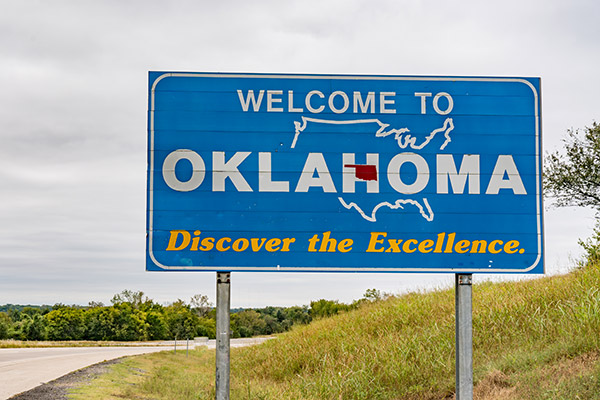
Multifamily Apartment Units: It’s less liable to even be tempted to look at anything outside of Columbus and Oklahoma. These markets just have a fair amount of inventory and deal flow in them.
Whereas on the multifamily side, generally when you scale, you have more team members to help. You spread out the responsibility, fear, risk, and all of that. In general, when you are securing these properties, you have a partner in the lender who brings most of the debt. Where you need to offset risk is coming up with a good property manager and/or asset manager to take the place of where you would be in that single-family.
In my opinion, it is more time-consuming to tackle multifamily assets. It is a little more stressful because of the scale, especially if you are first getting into it. Once you get astride, it is a little easier. I feel that multifamily has much more reward and much more upside for the scale of it all. The fact that you get to share it with a team of people versus you putting it all on your shoulders or one other partner.
To answer your question directly, I think that in the beginning, single-family is great, especially if you do not have a lot of capital and you are just trying to dip your toe. If you can scale, even though maybe it may seem like a lot more work, it is just more responsibility and a slight bit more stress because you have a lot more people you are responsible for, like limited partner investors, partners, counterparts, attorneys, and all this stuff that you are dealing with. That’s my opinion. How about you, Tate?
To me, the most important thing at the end of the day is what your goals are, how you are getting there, and how you are trying to achieve them. I am sure most of your readers are very interested in building financial independence through passive, residual cashflow, or however you want to look at it, and building wealth, building equity and wealth in their portfolio.
To me, if you are flipping, you are not doing any of that. You are basically letting an asset go that could cashflow and could build wealth over the course of time. If that is not your business model, and that was not our business model, I wish that it had been because things would be quite different now if we had kept even a quarter of what we flipped.
Quite frankly, we do not have the five people that you spend the most time with. We did not have those five people around us at that point that were bigger thinkers in the real estate investment world. It took me joining the Utah Real Estate Investor Association and Salt Lake Real Estate Investor Association. I started there and then goy into more national networking events and conferences. The national conferences have been huge along the way.
I have met amazing future partners there, investors, and the whole nine yards. You hear people say, “Apartments are easier than single-family.” To me, that doesn’t add up but there is a sense of, are they better? Is that the word you are looking for or is it more efficient? Certainly more scalable. You are way more leveraged as far as your resources, time and money. I would not want to do anything different than what we are doing.
In real estate, it’s all about your resonance and investors. Those are our two most important groups of people in the business.
I love this asset class. I love the game and the advantages that it produces for investors and residents, and the ability to come in and affect hundreds of lives in a community, and see smiles on the faces of little kids running around playing soccer. There is a lot of meaning and fulfillment there. I love the multifamily space. That is coming from somebody that did a lot of single-family.
For the crew, here is what you want to take away from that. There were a few things in there that we’ll tie-up. One, we can’t forget about community. It is fun to change a community and improve an asset for those kids that are living there. It is a lot of fun. I have seen it myself. You go to some complexes and in the first tours you are doing, there is nobody outside.
By the time you turn it around eighteen months later, you got kids running around and tenants coming up. You got Google reviews. You got all these great things. It feels good because you are part of something bigger, which is a lot of fun. You touched on something that we rushed over. I want to go back to it.
I want the crew to pay attention to this. You talked about the wealth versus short-term cash or payout let’s say for single-family versus multifamily. There is a tax advantage as well. Let’s touch on that quickly. When you buy a flip, you might have an equity event where 4 or 6 months later, you get this $100,000 or $20,000 you made or whatever it is, but you got to pay taxes on that. Just because you go and put money down on another property doesn’t mean you get to depreciate or write all that off. You have these equity events. It is like a roller coaster. It goes up and down. You never know when the next equity event is going to come and you get the right time.
You got to be cognizant of that and make sure you are on top of it. Whereas with multifamily investments, you bring in all these partners, you go all in together, you get these cost segregation studies. When you have equity events, especially for a real estate professional, you can then reinvest those funds back into other deals and take full advantage of those write-offs again. It mitigates a little bit of that tax risk.
You always want to talk to your own CPAs and financial advisors in full disclosure. Some people get wide eyes and think, “I am going to buy this house, flip it and put $100,000 in my pocket.” That is only if you time it perfectly. You are still going to have to pay 30% or 40% taxes on that $100,000 versus if you constantly have it in an asset class that you can depreciate substantially, which commercial you can. It gives you more advantages.
There are huge advantages to multifamily. While they may be a little more challenging on the scale of things, there are major advantages. You can attest to this, Tate, because you have had some great success. Kudos to you and your team for the number of doors you guys have accumulated. As we all know, it is not just about doors. It is about the process, journey, and type of assets with the returns you provide for your investors that make it a success.

Multifamily Apartment Units: One way of raising capital is to always lead with deals first. Be the guy that goes out and puts things under contract. And, it’s your job to figure out how to get it to the finish line.
At the end of the day, it is important to love what you do and believe in what you do. I know you and I are in this for the right reasons. Our hearts are in the right place. In GreenLight, we want to be the anti-slumlord, whatever that is or the opposite of that. We want safe, well-lit and clean communities that foster interdependence, people interacting, getting along well, and being enriched by being in a community like that. That is the opportunity. I was an RA in the dorms in college. We were constantly developing community through different events, fun things, activities, hanging out, and being together.
That can be life-changing stuff. You see a group of 6 or 8 kids playing together and it is like, “These are the friends that they are going to maybe have for the rest of their lives. These are the childhood memories that they are going to have.” That is all real stuff. It is a real honor to get to play the role of the landlord that is doing right by the community, and is investing the right amount of capital expenditure, improving the place, making the paint colors fresh and clean, and all that stuff. We are big on aesthetics. Chelsea, our partner, is huge in design and does a lot of design work for multifamily projects. We are big believers in aesthetics being almost dictating a lot of the quality of the community.
It is dramatic when you go in and see the significant change. The vibe, the attitude and the energy that you see when you renovate a clubhouse, add playgrounds or a color scheme, change the signage and rebrand. It is cool. Chelsea has tremendous skills there. What was the company that Chelsea developed for the design?
It is called ROI By Design.
You guys got to check that out. She has incredible design skills and partners with Tate and GreenLight Equity. She does a good job. She is an amazing individual as well. We have met a few times. Tate, let’s go back to your early days, and you could even dovetail this into multifamily because you have done a lot. You have a lot of experience. For those who are trying to dive into the space, maybe they are looking for their first property or their first single-family, one of the things that are not talked about a whole lot is this whole capital thing like raising capital.
Even on a single-family, you got to have some money generally, or you got to go to somebody to get some money. It could be back on your single-family days. Talk us through briefly what that process looks like. Ideas spawn. You do not just wake up and there is a proforma, a business plan or a spreadsheet in your pocket, and all of a sudden, you just go do this. You got to think, “I need a little bit of money here. I got to go do this. I got to execute.” Could you briefly talk us through it? It could be a single-family or multi-family example of how you worked through that process to then go under contract and do the thing.
Some people might not like this answer a whole lot. You might even take exception to it a little bit, but we have always led with deals first. In other words, you could point at us and say we are the guys that go out, put stuff under contract, and figure out how to get it to the finish line. That is the approach, for better or for worse, that we have taken along the way. It puts us in some seat of the pants situations in the past where we have deadlines coming up, we need to get something closed, we do not have all the capital in place, and we are not exactly sure where it is going to come from.
If your goal is to build wealth and equity, and you’re flipping, you’re not doing any of that.
I thrive in those situations and where it is like game on, the pressure is on, and you got to go make it happen or it is not going to happen kind of thing. We raised $14 million roughly. We are lucky we live in the age of social media, mass communication, and digital right to your phone communication, text messages and everything else. It comes down to letting everybody know what you are doing, being resourceful, and not being afraid to ask people or present opportunities to people. In the twenty-unit that we did, we worked with somebody who have over $500,000 equity in her house.
We worked with her and coached her through accessing her equity through a home equity line of credit, investing that in a deal with us, and making a nice return on the equity in her house. That was one of the investors that we had in that deal. Without getting into some of the technical capital raising stuff that we have done, in general, if you are not familiar with Gary Vaynerchuk or Gary Vee as he is known on YouTube, he is a great one in terms of social media. He will kick your butt until you are posting every single day or multiple times a day. There is a reason why lots and lots of coaches have you do that thing because it does work.
LinkedIn is a hot place for this industry, in particular, for meeting people in the capital space and equity space. We set up a deal finding machine, a deal underwriting machine, and a broker relations machine. Once our friends and family network was tapped out on our first couple of deals, we had to pivot and look at, “How are we going to do this exactly?” To some degree, we are still doing that. We are constantly working on that edge of the game.
It is not that I necessarily disagree with you. This business is not a one size fits all. Let’s say in multifamily investing, it is not like you can just buy a manual and follow it, and you are successful. I use that term loosely because we all deem success in different ways. We define it in different ways. What is great about you, Tate, and I can tell the crew this from personal experiences, is you are an amazing person. You are a genuinely good person. You are a great person to talk to. I get a positive vibe when talking to you. I can see how networking would be a huge value add to your team.
If you have that space that you can network, you can get out there and you are not afraid or if you have a team member that can do that, then you might have the guts to go after those deals first and find the capital second. You do not know until you try. In a worst-case scenario and most deals, as long as your money is not hard on day one, you can finagle out of it if something happens. Most people do not do that, but I am saying it is not the end of the world.
What I would like them to take away from what you said, which is important, is don’t be afraid to try different things. Do not be afraid to go against the grain, but what you need to do first is to exhaust your network. Make sure that you are telling the world and getting all the team members involved, not just one person. If the opportunity is right and you found a good deal, there is a good chance you are going to figure it out. That is what you guys are doing. You will yourself through to find that loose term success or level of achievement, regardless of the circumstance

Multifamily Apartment Units: If you are a hundred percent responsible for yourself and your reality, then those adversities will become lessons. They chisel you and make you better.
You fight tooth and nail and you figure it out, which is awesome. That is a great lesson. A lot of people will tell you to raise capital first. I have told many people that, because they do not have the tenacity. Maybe some of them do not have the gift of gab or the network. As you tell them, “You have got to have some money because that is a little bit of a security blanket for you,” but if you have the skillset that Tate and his team have, perhaps you can go out and do that. What are some of the best resources you use or have used to develop your skills? It could be software, books, a person, an individual or anything out there that helped you achieve the level of achievement that you have these days.
I will drop this book probably until l the day I die. It is a book I do not ever hear anybody else mention, which is interesting. Lance Edwards wrote a book called How To Make Big Money In Small Apartments. It is not really about small apartments. He says that he named it that because if he had said How To Make Money In Big Apartments, you would not buy the book because you could not have got your head around if you are doing big apartment deals. A lot of investors are like, “I can do a small apartment deal.” It is a great 30,000-foot view of the whole game. He simplifies and makes it easy to understand. He breaks it down to you are finding deals and dollars all the time. You are bringing them together and getting deals done.
That is what the game consists of. He does a great job with mindset. Chapter 11 is about mindset. It is a great audiobook. I recommend that to people that are looking at doing their first deal and what it might take to get their first deal done. Beyond that, I was in a great coaching mastermind with Corey Peterson. That gave us, as a company, a whole lot of confidence to go after some bigger deals because I was learning how to speak the language, build broker relationships, and underwrite deals, properly and conservatively. We also had a potential partner in Cory. We never did partner with Corey but he said, “If you find a good deal, I will partner with you guys on it.”
That is a clear path right there to a deal. It gave us the confidence to go out, start looking, pounding the pavement, and start looking at deals. These national conferences have been valuable and such time very well spent. The content and speakers are always great, but the networking of these well-run ones is second to none. Those have been big in my growth as a business person.
There are three things there. It is a great book, an educational piece. You got the mentor coaching programs, which is incredible. I believe in those wholeheartedly, and then the conferences, which is great to get in front of people and network. I would encourage the readers, if you do go to these conferences, to engage and take action because I have seen people over and over again at conferences that are not taking action. They just go to conferences. If you are going there, you got to have an agenda. Who do you want to meet? What do you want to learn? How much action are you going to take when you leave? It is critically important.
One last question for you. You have this great dynamic background. I know you are a faith-based guy. I know you tried all these different things, and have had some successes and some ups and downs. How do you think your life has turned out versus what maybe you thought? You opened with, “I was a photographer,” which is awesome. I can tell because I live vicariously through your crazy Facebook posts about wildlife, mountain biking, skiing and all kinds of cool stuff. How has your life turned out differently than maybe you thought it would? Summarize that for us because you are an interesting guy.
It’s quite possible that things will turn out far better than you can imagine.
I am looking at the door in my office. I have got a sign on my door that says, “It is quite possible that things will turn out far better than you can imagine.” My life is a testament to that. I have had my own personal ups and downs and had some tough times along the way. We have had professional ups and downs. I did not dive too much into the new build townhomes we did a few years ago, but those were tough and we lost a lot of money on them. We have had to dig out or have successfully done so. At the end of the day, those adversities, if you are 100% responsible for yourself, your reality, and the way that you show up, those adversities become lessons. They chisel you and make you better.
In my case, those tough times made me a more faithful person. I am not a religious guy necessarily but when I say faith, it made me lean into looking at my life up until then and going, “Things generally work out for me pretty well.” Something seems to be up here. Somebody is helping me along the way because it sure feels that way. I am like, “I am going to proceed through this dark night of the soul or the bad deals as if they are going to work out at the end somehow, even if I do not know how.” It made me flex my faith muscle in life.
I feel like I live the dream. I get to ski 50 days a year. I have got a lot of free time. I got a wonderful dog and a wonderful family. I do not have an immediate family of my own but I am a single guy. I loved that lifestyle and that could change too. Life is a wonderful mystery. All of life is an absolute miracle or it is not, depending on how you look at it. For me, it is clear in my heart that life is a miracle and I love it.
It is perspective. We are born the same physically oftentimes. We come out like, “Here we are.” Maybe you have a disability or you are a different color, but we all come out about the same when we start. We go through this life transformation process. These things happen to us, for us or this environment we are born into. At the end of the day, you have to have that mindset of every day is a blessing, bliss and good. Let things happen to you that bounce off of that good.
Do not start the day with a negative mindset. Don’t let those challenges get you. Don’t let a tough deal break you down. Push through it and try to see the positive. At the end of it, know that at some point there is going to be positive. You touched earlier on these townhouses that did not work out. You have had some great success. It is like, “In 6 or 9 months, we do these 500 or 600 doors.” It is astonishing.
I remember years ago, I heard a famous person on a podcast talking about, “I have 300 doors,” and I thought, “Wow, 300 doors?” I could not believe it. Here we are talking about, “I got 580 doors,” almost like it was nothing. It is a massive achievement. You do not get there without the right mindset because there are going to be tons of ups and downs. You know that, but it is great that you reiterate and share that. I appreciate that. As we come to a close here, would you share with the crew how they can find you and what they need to know about you? If there is any call to action you have for them, please share.
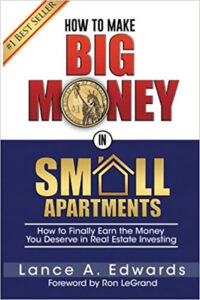
How To Make Big Money In Small Apartments
Go to www.InvestWithGreenLight.com. You can book an appointment with me there, get my phone number there, text me if you want. You can email me from there. I would recommend if you are in a place of feeling inspired by this episode and are ready to launch, and maybe you are in the place of you got some or a lot of single-family experience, but you want to get into multi, book a fifteen-minute appointment with me. I am here to help, no strings attached. I love contributing to people’s success. I love brainstorming. To me, this is a blast.
What we did here is a blast. Getting to talk to people about things that might move the needle in their business and make them successful is a privilege for me. I am lucky enough in my career that I have time in my schedule and my Calendly link for that. Book an appointment with me. We will jam and talk about business and some next steps that you could take. I am here to help in any way I can.
Please do not forget to like, subscribe, slam on that button. Tell the world about us if you love this episode and reach out to Tate. I can tell you firsthand that Tate is an amazing individual. He is a very sincere and genuine person who runs a great company. He has got a phenomenal team and they will do nothing but good things for you. We appreciate you tuning in and we hope you have a fabulous week. Thank you so much, Tate Siemer, and have a wonderful day.
—
We had an awesome interview with Tate Siemer. We are going to review two of the takeaways from the interview. We are going to start with the word success. I asked Tate, “How do you define success in your life?” He said that it is more about growth and spiritual journey for him versus the number of doors you have, the amount of money you make, and the number of businesses you develop. I thought that was cool. I never heard anyone talk about spiritual mindset as being a foundation for how they measure success. Tune in here a little bit more about how he defines and how he uses it in his personal and professional life.
The next thing we talked about was how he feels about acquiring opportunities or deals. All the way back into his early days with single-families when he was doing flips, then into duplexes and multifamily, he said that he always look for the right deals first and then he found a way to make it happen.
He would then develop the equity plan. That goes sometimes against the grain with the way a lot of people feel, which is, “You need money first.” His interesting perspective as to why he does that was good. I hope you tune in and read Tate’s version of why he goes after deals first versus equity which is the amount of money you need to acquire those deals. We appreciate you. I look forward to seeing you there.
Important Links:
- Tate Siemer
- Utah Real Estate Investor Association
- Salt Lake Real Estate Investor Association
- ROI By Design
- How To Make Big Money In Small Apartments
- www.InvestWithGreenLight.com
- https://www.Facebook.com/Tate.Siemer/
- https://www.Instagram.com/TateSiemer/?hl=en
- https://www.Linkedin.com/in/Tate-Siemer-367939160/
- https://Podcasts.Apple.com/us/Podcast/The-Apartment-Guys-Podcast/id1500967265
- https://www.YouTube.com/channel/UCJlFpG9UTX8g8xwzhIiurgg
About Tate Siemer
 Tate Siemer is the visionary and CEO of GreenLight Equity Group, which currently owns 572 units in Oklahoma City, Utah and Columbus, OH. Tate’s passion is improving apartment buildings in such a way that maximizes value of community.
In order to provide solid, consistent returns to investors and well-being to residents, Tate and team operate clean, safe, progressive communities that promote a thriving living environment.
Tate hosts “The Apartment Guys Podcast” and serves on the Executive Board of the Utah Real Estate Investor Association. He enjoys helping fellow investors and entrepreneurs through mentoring and coaching. Tate’s other passions include big-mountain skiing and mountain biking, music, and hiking with his dog, Joey.
Ready to plan your early retirement?
It all starts with passive
income. Apply to join
the Sterling Rhino
Capital Investor Club.
Already working with us?
Welcome back.