

Building A Financial Foundation Through Passive Income In Real Estate With Justin Dixon

Having a solid financial foundation is key for people who want to make real estate investing their fulltime job. You need to build the mindset, knowledge and skills to be ready for every opportunity and challenge. In this episode, Chris D. Roberts discusses real estate investing with Justin Dixon. Justin is the founder of Great Venture Capital, and he shares his journey from employee, to recruiting business owner, to real estate investor. Learn from Justin as he dives his experiences on the road to financial independence.
—
Listen to the podcast here
Building A Financial Foundation Through Passive Income In Real Estate With Justin Dixon
We are here with Justin Dixon. What is up?
What is going on? It’s nice to see you.
Justin, it is so great to have you here. We were at the Best Ever Conference, talking and jamming back and forth. I am excited to have Justin here. He has got a lot of experience outside of the multifamily space. We are looking forward to hearing his story but to start, we’ll ask Justin. Justin, how do you feel about the word “success?” In your own words, would you describe to the readers your version or definition of the word, please?
Success is different than some other people’s definition. A lot of people talk about financial success and all that. That goes into it but for me, it is about owning my own time. I want to make sure that what I am doing with my life and with my hours in the day are finite and I am being able to utilize them as best as possible. One of the things that attracted me to multifamily real estate is having the ability to define my time and live on my terms. That is different for everybody. The reason why I am doing this leads to my why as well. Some people define it by a bank account and that is a part of it but it is owning my own time and being able to do what I want.
Charging Forward Crew, what I want you to take away from that is we all want to be successful but oftentimes we do not define that. He referenced his why. He talked about managing his own time, defining his own life and living it on his terms. Justin, I would ask you if you do not mind, to dig in as to what that means for you because I agree with you.
You are brought up in this life to go and punch the clock every day. You go to school, have kids and all these things pull you in all directions. Your life controls you. You do not control your life. Justin, in your terms, when you say control your time, destiny, and why, would you mind sharing an example of anything in your life where you are finding that you are moving into that space?
Multifamily real estate gives us the ability to define our own time and live on our own terms.
I grew up in a very small W-2 job family in Central PA in a small town. My investing advice or life advice was to get a good job with a good company that has a good 401(k) and buy a house when you are able. That was it. There was no talk about multifamily, real estate investing or investing at all. When I think about defining and owning my time, my mindset shifted a few years ago. It was like, “I need to not work for somebody else. I need to be working for myself.” I am not at the financial freedom number that people talk about that they can still live on a beach somewhere. That is not my goal at the moment.
I quit my W-2 job a few years ago. I have a recruiting business and I do real estate investing. I can go on trips like being at the Best Ever Conference. While that is a business expense from a real estate perspective, I am also able to do real estate. Before that, I was seen in Utah. I am not taking “the two weeks off” each year and going on a vacation and unplugging but I am unplugging while I am on the mountain long scheme and when I go to the beach in the summer with my wife.
While I still have to do some work things, I can do what I want and still be able to run two successful businesses. That is how I think about owning my time. Eventually, I will get to the point where the amount of time that I am spending on those businesses while I am away is less and less but the life that I want is to be able to travel, still have a laptop and pretty much be plugged in wherever I need to be.
What is amazing about what you said and I am sure you would agree with this because I could tell by the way you described it is while you may not be taking regular two-week vacations, when your time is your own, you are more productive. You can get more done because you might work 18 hours in a day sometimes but you take 1 hour off, 30 minutes off or go run an errand, come back and then your mind is clear. Having that freedom and flexibility opens up the creative juices and allows you to be more productive.
The change of scenery helps too. We have all been in this work from home. You see the same four walls day in and day out for the last couple of years. Getting out and talking to people at Best Ever and face-to-face has been eye-opening and inspiring as you think about the ebbs and flows of business and life in general. Sometimes you need to get out and take a pause from work, your Zooms and your laptop. Go sit in nature, sit at the beach, go for a hike or walk. It energizes and recharges you.
The other thing that is interesting about that is you mentioned the conferences. Wherever you go and whatever you do, when you are in the entrepreneurial space and you start to get into that freedom lane, you surround yourself with like-minded individuals who are also fired up and excited. Even if you have not accomplished significant things quite yet when you are starting, it is that journey and vision of success that you might have of your ideal freedom, why or whatever it is that you are living out that keeps you fired up differently.

Financial Foundation: Face to face is definitely eye-opening and inspiring as you think about the ebbs and flows of business and life in general.
A lot of folks grow up. We all started there where we are in that cubicle environment, flipping burgers or whatever we are doing that we are told to do a certain thing but we are not being challenged as intellectually as we could be. Whereas when you are put out on the island to go succeed, there is nothing but up. It is like, “Let’s go.” You are trying to surround yourself with those people that are also fired up. You are sharing ideas and pushing each other forward. It gets a little scary sometimes. There are ups and downs but it is your ups and downs that you dictate and define. That is the most exciting part about it.
I grew up in a very small town in Central PA. My dad worked for the same company for over 30 years. The only reason why he left is that the plant shut down. We were right in the middle class. We were not wealthy nor poor but my philosophy was my dad was a very budgeted person so I grew up that way. When I got out of college, I moved away to York, Pennsylvania and started in the recruitment world. I fell into it right out of college and I have been doing it ever since. I eventually moved to Philadelphia and worked for a massive staffing firm.
I did some executive search for a small shop before moving into a corporate recruiting environment for a startup and then I worked for the behemoth in Philadelphia, Comcast for five years before leaving and taking the role as the Head of Recruitment for a mid-sized wealth management firm. That was at the end of 2018. I got my MBA and then moved into this management firm. I had always wanted to do the entrepreneurial thing. I always have that bug in the back of my mind and was like, “I got to figure something out.”
I am also a very risk-averse person and so was my wife. We are two peas in a pod there and looking back, I wished one of us was riskier. We have always been this risk-averse plan and then make attacks which have helped me in a lot of areas of my life. I have also missed out on a couple of opportunities that could have been great but were super scary at the time. I assumed back in 2017, 2018, I would have been the corporate guy. That was my career path.
Like a lot of people in the real estate world, I read Rich Dad Poor Dad. I got down with that book and my mindset shifted. It was an exciting and scary moment because I was married. My wife and I had a condo in Philadelphia that we had bought. Real estate investing was not something that I had ever thought about nor did I have access to it. I shared the book of my wife because my mindset was like, “Investing in real estate, I need to figure out doing my business and owning my time but I also need to have Allison, my wife, on board.”
I gave her the book and did not give her any context. I said, “Please read this. Let me know what you think.” She got down with the book. We sat down and she is like, “What are we doing? Why are we not investing in real estate? Why are we not starting businesses or running businesses?” Luckily, she was on board. She was very interested in jumping in with both feet. Right after we got done, we had started devouring content like podcasts, BiggerPockets, and reading books.
Multifamily is a team sport. Unless you’re an uber-wealthy person and have a ton of experience, you can’t take a 150-unit apartment complex down by yourself. You need other people.
If you listen to BiggerPockets or any of those podcasts, there is somebody very successful in every aspect of real estate whether you are a fix and flipper, small single-family, buy and hold, people doing Section 8 housing, doing large multis, storage and all this stuff. I did not want to go into single-family because that was too risky. If you have one tenant in a property and they leave then you are on the hook for the whole mortgage. I also did not have the mindset to go after 40, 50, 60, 100-unit apartment complex.
I started in the 2 to 4 unit space. I looked around Philadelphia because I wanted to be in the market that I was in. I wanted to see the properties and all that fun stuff. We could not find anything in Philly that we liked. We put an offer on a couple of places, got one but we backed out of it because the inspection was not great. We found a property in Pittsburgh and I googled, “Best real estate investment markets in the US.” The normal players came up, The Floridas, Texases, and Atlantas. Surprisingly, Pittsburgh came up, which is about five hours away from Philly. My mom grew up in Pittsburgh. I spent a lot of time there as a kid. I had some affinity with the area.
I googled, “Real estate agents in Pittsburgh.” The first guy I called, I explained, “I am new. I have never done this before. This is what I am looking for and the capital that I have. This is the property that I am looking for. I am looking for a real estate agent that likes to work with investors.” He said, “I am pulling up to a flip. We will get on the horn tomorrow and talk about what you want more in detail.” The rest is history. We looked at eight properties. He toured all of them, took a video of the property and then shared it with me. On the ninth one, we found a great duplex. It is a side-by-side twin. One unit covered the mortgage. I am like, “The second side is gravy.”
I have a property manager out there that manages property so it is passive income for me. We had a couple of hiccups during COVID like a lot of people did but everybody is paid in full and we are humming right along. On the fifteenth of every month, I get a statement in my email and a check in my bank account. It is great. We chased the shiny object for about six months. Every time we heard a BiggerPockets episode, we went after that asset, multifamily and mobile home parks. If it did not work in five minutes, we just quit. We are like, “We will do something different.”
I kept coming back to this syndication thing and was like, “I got to figure out how to make this work.” It sounds cool to say, “I own part of that 100-unit apartment complex over there.” I started looking for a mentor because I quickly realized analyzing a 100-unit apartment complex is very different than analyzing a 2-unit apartment complex. I realized I needed to find somebody that was doing this, invest in my education and join a mentorship group because as you know, multifamily is a team sport. Unless you are an uber-wealthy person and have a ton of experience here, you can’t take a 150-unit apartment complex down by yourself. You need other people.
I looked around for a mentor and a learning group. There are a number of them out there. I found one group down in Dallas. They have been super successful. He was at the Best Ever Conference and spoke a couple of times. I resonated with his group because it is smaller, more intimate and family-oriented. Everybody is there for the same goal. We are all trying to find that financial freedom goal and help other people get involved in real estate investing. I joined that group in February of 2020.
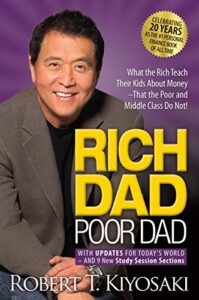
Rich Dad Poor Dad: What the Rich Teach Their Kids About Money That the Poor and Middle Class Do Not!
To back up a couple of months, going back to me wanting to do the whole entrepreneurial thing, my wife and I put together a plan. At the beginning of 2020, I was going to quit my job. I was making over six figures at a cushy job. It was not super difficult but not super happy either. I wanted to jump in with both feet. On January 27th of 2020, I was out on my first official day of being self-employed with a recruiting business that was fresh off the presses and a real estate business that I started and COVID hits. 2020, if you remember that far back, from a recruiting world perspective, it was very dark and not a great industry to be in. Luckily, my wife had a steady W-2 job. She was earning enough money to cover all of our expenses so we were not going poor but if she would have lost her job, that would have been an even scarier time.
Recruiting was not very busy in 2020 so I took that year to learn about multifamily. I dug into the analysis, how to underwrite markets, find good markets and underwrite deals. I underwrote over 200 deals that year. I took a trip to the Carolinas to go meet brokers and tour properties. I drove down there because I was not super excited to get on a plane at that point. That led me to 2021. Recruiting has increased rapidly. It was an amazing year to be in recruiting, also an amazing year to be in real estate. My wife and I invest passively in a deal because we wanted to learn how the whole process worked.
We also wanted to make sure when we got investors that we could explain to them what the process looked like and how it worked. In 2021, we invested passively in 5 deals and raised capital in 2 of them. We started to build our capital raising muscle. That brings up the present day. It has been an amazing ride. It was pretty bumpy in 2020 but has been awesome for sure.
We would all agree that COVID was extremely challenging. There were several years of chaos. Some people did well. Some people did not do so well. It allowed a lot of us to reflect on where we are, what we are doing and where we want to be. It was quite a shift in the economic output and the way people are looking for jobs and working from home. I want to take you back on something you said which was around 2020. We were very active during 2020. You burned the boats in 2019, 2020 somewhere in there and then jumped into this recruiting business, multifamily and educated yourself.
Whether it was the conversation with your significant other, the mindset shift you had or a period, take me back to that point where you made that decision. That takes a lot of courage or drinking one night, calling up Boston the next day and saying the wrong things. Either way, you decided that a lot of folks are very hesitant to do. I want to go to a Jack Canfield quote that touches on something you said which is one of my favorites. “Everything you want is on the other side of fear.” I love that because it is so true. You do not know until you get to the other side of fear what you are capable of and what can occur in the success you can have or whatever it may be. You have got to take that leap.
Many of us are so fearful of that especially because we do not see that many people around us have done that and you do not draw from their experiences to say, “They did it. I can do it. Let me see what it was like for them.” We stay in our silos. If you do not mind, please take us back for a second to that point if you recall and share with us what was going through your head and the first steps.
Starting a business is different from being a good recruiter. There are a lot of other things that have to go into being a business owner and running a business than just filling jobs.
It was a series of conversations. Some of them were alcohol-filled and some of them were not. In the back of my mind, I always had this thought. This is going back years that I wanted to do my thing. I did not know what that meant or what I could do and because I have been real recruiting for so long. If you are a carpenter, you go start your carpentry business. I was like, “This is going to be easy for me to start my recruiting business.” I talked to my wife and did the math. We get some savings and have this investment property that was given us some cash. It was not a lot. It was a couple of hundred bucks a month so I can’t retire on that.
It gave us some confidence and then I saved a good amount of money because I wanted to have some financial runway. Our worst-case scenario when we talked about this was, “I would not like it and not fill many jobs. I would go back into the corporate world.” That was not even close to the worst-case scenario because a global pandemic is worse than that.
It was my wife and I have conversations. I am fortunate that she was on board and willing to take on the burden of keeping a W-2. She is an amazing employee and worker. She works way harder than I do and way smarter than I am for sure but she was like, “I will be the Steady Eddy and be the benefits. I will get a steady paycheck. You go out and try to build this business.”
In the recruiting world, you do not have to do a ton of business to make the amount of money that I was making as a W-2 employee. The math made sense. Normally, when you quit a job, you have something else to go to. You have got another offer already lined up. I was going into the abyss. I was very confident in my ability and network in the Philadelphia area that I could call on people, get some business and it was not going to be that big of an issue.
The other reason why I started my recruiting business is to have the time that would be my own that I could also devote to real estate. I was not intending necessarily to start this and build this massive recruiting business. It was a stop-gap until real estate took off. I have had to pivot that because recruiting is so busy and I can make a lot of money. I am looking to hire somebody for my team because I am that busy. It has ebbed and flowed as well. The period was five months at the end of 2019 when both Allison and I were very interested in real estate and knew that we could not be as successful as we wanted to be with both of us working a W-2 job.
We did not have the time. Everybody says, “We do not have the time,” but we both work ten hours a day in our W-2s. We want to have a personal life and all that fun stuff. Our solution was I was going to quit, start my recruiting business, do that on the side and focus on real estate. That is how it was. I was fortunate that my wife was very supportive and willing to take on the burden of being the W-2 and the paycheck in funding our life. I was also fortunate that we had some savings, that if things did not go well and even if Allison would have lost her job, we still have a financial runway to get us 6 months to probably 1 year without earning any money. We had to take the leap and be risk-averse. We planned and then took the jump. That is how the whole timeline went.

Financial Foundation: Every time we heard a Bigger Pockets episode, we went after that asset, we went after multifamily. We went after mobile home parks, et cetera. If it didn’t work in five minutes, we just quit. We did something different.
Charging Forward Crew, I want you to take away from what he said. Sometimes we are fearful because we have not planned appropriately. We know we are tired of the 9:00 to 5:00. We have this entrepreneurial itch. We want to leap but that fear holds us back. Justin touched on the fact that he had several conversations with a significant other. They put a strategy together, had a little bit of savings, lived below their means and were somewhat financial savvy so that they could take that risk because they had a backstop or had built a foundation. Also, Justin knew that he had within him the ability to go out and find another job if he needed to.
It was not like he could not go pick up where he left off. That allowed them to have the confidence to leap. Another thing that is cool that someone told me long ago which was critically important for me to leap was, “You need multiple streams of income.” Before I had multiple streams of income, it never even crossed my mind. I thought that you go work and make money. That is that. If you are fortunate enough to have extra and you do not live up to your raises all the time, you can invest. Multiple streams, what does that mean? If I have free time and I can find a way to make a little extra money on the side then I can use that money to invest or grow a business.
When Justin burned the boats, he jumped into two fields. He said, “I am going to start this recruiting business. Make a little money on the side, maybe it grows or doesn’t but I am going to work that. That will give me the freedom to go pursue this multifamily thing because I have experience there.” Lo and behold, as we have gone through COVID, the recruiting business has taken off as his multifamily business has taken off well, which is great. From there, he has a single-family with a little cashflow. Significant other has a job and W-2 benefits. They get another property, investment and the recruiting business takes off. The next thing you know, you have 5, 6, 7 streams of income and then you are not fearful. You can take that extra vacation and live a stress-free life.
Here is the reality, Justin. I am sure we can all attest to this. Issues are going to come up in life. The health issues are going to hit you out of nowhere. A family member, an animal in your life or something happens where you have this financial constraint that hits you. If you have those multiple streams, it relieves that pressure. Thank you so much for sharing those details. That is awesome and you went about it the right way. Congrats on your success with the recruiting business and multifamily.
Let me ask you this, Justin. Of all the things you have done, you have had some ups and downs, besides the Rich Dad Poor Dad book because that is a phenomenal book that everyone has read, it is amazing. Is there any other influence in your life, be it a mentor, another book, quotes, whatever it may be but something you lean to that inspired or helped you move along this path of success that you could share? If it is a person, would you mind sharing why?
Before I do that, one thing you touched on that I forgot to mention is the living below your means piece. We bought a condo in 2013, 2014. That was our primary residence. Before we made the final decision to quit my W-2, we moved out to the suburbs, downgraded our lifestyle and rented an apartment that was less than our mortgage on our current place.
Plan for the worst, but give yourself the ability and the time to think about what is the best thing that could happen.
The apartment was not as nice as our condo. We rented our condo out. We did that and everybody thought we were crazy. We had this nice condo in the city and moved to this “okay” apartment in the suburbs. People did not understand our mindset of, “We are doing this for our financial future. Not because we want to live in this big house.”
It also gave us comfortability because we took our expenses and shrunk them to a point where my wife’s salary could more than cover our minimum expenses and we only have one car. We did the work to get our lifestyle to shrink as much as we could to make it a soft landing as possible. For who has influenced me the most, Rich Dad, Poor Dad was the biggest from a mindset shift perspective to make me make that transition from a W-2 to an entrepreneur. There are two people, one I know and one I do not know, that have influenced my life in very positive ways.
The first person is my dad. Even though he was not the investor extraordinaire and did not invest in real estate or teach me real estate, he taught me how to be budgeted and be very budget-focused. My wife and I still live a very nice lifestyle. We do not have the newest cars and all that fun stuff. We do not chase those very shiny, Keeping Up with the Joneses objects. We try to live our lives more by experiences. Being budgeted since I got out of college, I have kept a spreadsheet since I graduated college in ’06. I could still look at it and see what I made back in ‘06 and what my expenses were. It has changed a lot, which is good.
That has helped me to make sure that I am financially secure and I have got the financial foundation that I need from savings, not necessarily from passive income. That is a very big help in my life. People think I am crazy because if I buy a pack of gum, I chart it on my spreadsheet and make sure I track that. James Caan is a British gentleman that started recruiting businesses back in the ‘80s. I have read his book and that also got the fire burning in me a lot more around starting a recruitment business and jumping into the things that I know well.
Starting a business is different than being a good recruiter. There are a lot of other things that have to go into being a business owner and running a business than just filling jobs. He helped me think through the other things that I need to do and the mindsets that I need to be able to build a successful recruiting business and business in general. Those are the two people that help influence from a culture and budgeting perspective and also on mindset.
Justin, you said something that I never heard before. Many of us entrepreneurs aspire to have that freedom, whatever that is. We go in one direction like, “I am going to be a multifamily guy, be a single-family person or start a coffee shop.” You mentioned, “I read a book and it got me fired up about recruiting so I go on out and started a recruiting business.” That is very unique. There may have been some other influence that drove you down that road or put you in that silo but, interestingly, you read a book about recruiting, inspired enough to go out, become a recruiter and then have some success in that space.

Financial Foundation: Our solution was quitting the recruiting business, do that on the side and focusing on real estate.
That is pretty exciting. I want the Charging Forward Crew to take away that you have to continually educate yourself and also not just read romance novels or watch reruns. Even if you are a multifamily syndicator, you want to read books about mindset and other businesses. There are a couple of great books like Good to Great and Built to Last. There are so many great books out there about corporations. You never know what inspiration you might find in a different business. It’s very interesting that took you down that path.
I had already been in the recruiting world. It was just a job though. I fell into it. I never sought out recruiting and it happened. I stumbled upon James Caan because, before Shark Tank, it started over in the UK called Dragons’ Den. He was a dragon on that show. I got to learn about him and his life. The other piece about being in business, which is not specific to recruiting or real estate is what you give back.
It is important as you become successful that you are contributing back to the world. It does not have to be financial. It could be time, sitting on boards and sharing your knowledge. He did a lot of that in that book. There are a ton of other books that share about once you have the wealth and even before you have the wealth, you should give back your time and expertise to different causes. As we are throwing out books, a book that helped Allison and me, as we were going through the thought process of jumping into real estate and entrepreneurship is Vivid Vision.
Reading that book is a very simple book but it helps you to formulate out, “What is the best-case scenario that could happen?” A lot of people think about, “What is the worst?” You plan for the worst, which I do all the time. I am a very risk-averse person. You also have to give yourself the ability and the time to think about, “What is the best thing that could happen? How cool would it be if this happened?” Once you start to do that, that is where you get excited. For me as a risk-averse person, it helps me to say, “I am prepared for the worst. I have got that covered but let’s think about where could I be in a couple of years? What could my life look like once I start to build this financial foundation?”
I got away from calling it financial freedom because it is very different for everybody. I started to think about, “What is the foundation that I need to build financially so then I can jump off and do whatever I want?” I can keep working, go sit on a beach and travel but I need this foundation. That can be from passive income streams and active. Vivid Vision helped us think through the steps and write down what the next three years could look like. COVID was not in that workstream.
I went back and read my Vivid Vision and we are on the right path. We are not living in Tampa which is where we thought we were going to live but we are in Austin, Texas. We do not live in Philadelphia. We moved here in October of 2020. I wish I would have bought as much real estate as I could get my hands on back then but I did not. It is what it is. I wanted to throw out the Vivid Vision book. It has been super impactful for me and other people that are in the entrepreneurial world.
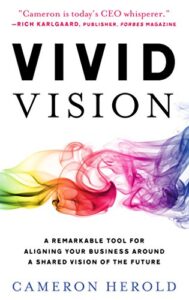
Vivid Vision: A Remarkable Tool For Aligning Your Business Around a Shared Vision of the Future
You have to have a deeper purpose and why of something that inspires you outside of whether it is making more money or having business success. Life is broad but also so short. There are so many little things that go on. I always encourage people to remember your significant other in your life, whoever that is, and your kids. It is very easy for us to get in this crazy busy business lane and forget like, “Did I tell my wife or husband that I loved them when I got home? Do I stop for a second and chat about their day?” Listen, not just, “I heard you. Keep going.”
Those are the important parts of our life that can get overshadowed by this entrepreneurial mindset that we all develop when we want to have this freedom but not necessarily financial freedom. The true way to freedom is to be fulfilled all into your life, not just have a bank account with some zeros in it. I love that you said that. We are the same way.
We are partners with Feeding America. We went over the million-meal mark. It is great. You are doing some stuff too. I appreciate you sharing that. Justin, would you mind sharing with us a short version of a challenge you incurred and how you overcame it? It could be anything through this process because there are lots of challenges. Any that stands out.
There is a lot that I could tap into with COVID but I will keep the COVID light. The biggest challenge is imposter syndrome. My life has been, in my LinkedIn profile up until a little bit ago, everybody that I know that knows me, knows me as the recruiter. I am the guy that can help you find a job or whatever the case. When I quit my job and I tell people that I was going to start a recruiting business, that makes sense to them even if they are not entrepreneurial-minded people. They’re like, “You are a recruiter. You know how to do that and have been successful. That makes sense that you started a recruiting business.”
I started to talk to people about real estate. A lot of my friends that I still am friends with, their eyes started to glaze over when I started talking about, “Allison and I bought a duplex out in Pittsburgh. We are putting offers in on 100 plus unit apartment complexes.” Allison and I were jazzed about recruiting and that was becoming the things that we wanted to talk about when we went to dinner with people but 90% of the people that we talked to were in the mindset of, “I am a W-2 employee. I have a house, kids and family. That is the life that I am going to live.” Fair play to them, that is fine. A lot of people do that. It was alienating for us that we were like, “We do not want to talk about that. We want to talk about the investments that we are doing.”
I needed to get over the fact that nobody knew me as a multifamily real estate investor and that I knew anything about real estate other than I bought a condo. That was my residence and everybody else buys their own house. It took a while for me to feel comfortable putting content on the internet. I have got a big LinkedIn following. When I started to shift the narrative around, “I have this recruiting business but then I also am doing this real estate stuff that is a more of a passion of mine and recruiting,” that took me a while to get over.
It is still something I deal with regularly when I introduce myself to people, they say, “What do you do?” That is the second question other than, “What is your name? Where are you are from?” Depending on who my audience is, I say, “I am a recruitment entrepreneur or a real estate investor.” When I am at Best Ever, I am a real estate investor. That is what I do. If somebody is sitting in a W-2 job that is in sales or financial services and starts to think about, “I want to get into this real estate game,” you have to think through, “How do I message this to people, get people and myself comfortable?”
I am becoming knowledgeable about the multifamily syndication world. When people ask me questions, I have an answer, whereas years ago, I did not even know about the space. Imposter syndrome was a hurdle that I had to get over. It took me a good year. That year of 2020 of my underwriting deals gave me the confidence so whenever I would talk to a broker or another partner that I am trying to find a deal with, I was very comfortable and confident in my underwriting.
That helps me when I talk to investors or passive investors about deals that I am investing in and they should think about investing in. I already know that I have been able to use my underwriting skills to vet the deal as much as I possibly can. That gives me the confidence to say, “This is the deal, why I like it, why I am investing in it and why it could be good for your portfolio.” The imposter syndrome can be brutal.
The reason I love this answer is that so many people jump into something and they are not quite sure how to articulate what it is. They have some fire, passion and enthusiasm. It’s not always enough especially when you are asking someone for $50,000 to $100,000 to invest in an opportunity with you. We can go back to any business shifts from W-2 to 1099 or entrepreneurship.
That applied knowledge is what is going to help get you over the hump. You touched on it, which was, “I started to build out my gift of gab and become more educated. I built my confidence and then pretty soon, people could tell I was somewhat of a thought leader in my space. They started to get more comfortable with me having this conversation.”

Financial Foundation: Depending on who our audience is, we say either we’re a recruitment entrepreneur or a real estate investor.
I 100% agree with you, Justin, which is why I am so glad you brought this up. I can relate to that because when I first started, I had business success but then all of a sudden you are talking about buying $10 million, $20 million assets. They are looking at you like, “How are you going to do that?” You go, “There is this whole thing.”
You are trying to explain it all in a dinner meeting with family and they are looking at you like you are out of your mind. Lo and behold, after a while, you acquire a few of these assets and you’re like, “I told you. This is not unlike any other business or trade out there that you are doing business with like walking into the UPS store or Ross Clothing.”
We are buying apartment complexes. It is business. The difference is you can’t see that I can do this because I am shifting the way I do things. I am glad you brought that up because that gives people a vehicle to think through, “How am I going to have these conversations with people?” The way you do it is you have to become knowledgeable, practice your craft and build some credibility. Another way to do that might be you ride the coattails of someone else. Maybe you partner with someone in the beginning that has that thought leadership.
For example, I know a friend of mine owns some coffee shops. One of the things they do is if you want to open up a coffee shop off of their franchise, you have to work in the coffee shop for a while before they will allow you to go and open up these franchises. That is great because they go and say, “I worked at this coffee shop for six months. I learned the business and I opened one. Come to my coffee shop.”
It is no different than being in a mentor program, riding the coattails of another group that you partner with. Justin, thanks so much for that. That was great. I am sure that the Charging Forward Crew is going to get a lot out of that answer. Justin, why don’t tell our Crew how they can get a hold of you, what you are doing and the last-minute stuff here if you do not mind, please.
Real estate-wise, we have a website GreatVentureCapital.com. Go check that out. My email is the best way to get me. It is Justin@GreatVentureCapital.com. I am very active on LinkedIn so shoot me a LinkedIn message. If any of your readers need any recruiting support, Hire Tomorrow is my recruiting business. Shoot me a note on that. That is the best way to get me.
Thanks, Justin. You can find us at SterlingRhinoCapital.com. Check us out on YouTube. We got a lot of educational material. Please like, subscribe and review the episode of the show with Justin if you enjoyed reading it. We look forward to sharing more nuggets of knowledge. Justin, thanks so much for sharing your story. You rock. Wish you all the success in the world. We look forward to staying in touch with you.
Thanks for the time. I appreciate it. This is fun.
Important links
- Justin Dixon
- Best Ever Conference
- Rich Dad Poor Dad
- BiggerPockets
- James Caan
- Good to Great
- Built to Last
- Vivid Vision
- Feeding America
- LinkedIn – Justin Dixon
- GreatVentureCapital.com
- Justin@GreatVentureCapital.com
- SterlingRhinoCapital.com
- YouTube – Sterling Rhino Capital
- https://www.LinkedIn.com/company/Great-Venture-Capital/
About Justin Dixon
 Justin grew up in a very small town in central Pennsylvania, and after graduating from college he found himself working in the recruiting industry, which he has remained in for the last 15+ years. In January 2020 he left a very stable, six figure salaried job to start his own recruiting firm (Hire Tomorrow) and a Real Estate Investing Business (Great Venture Capital) – not great timing to be starting a recruiting business in 2020 when the world shut down with Covid and no one was hiring.
But over the last 2 years he has grown his recruiting business to a very sustainable level and has been able to acquire over 340 multifamily units, as a general partner, across 3 states. He is passionate about helping those working W2 jobs, who thought real estate investing was only for the ultra-wealthy, or for people that have a lot of extra time on their hands, get access to this amazing asset class.
Ready to plan your early retirement?
It all starts with passive
income. Apply to join
the Sterling Rhino
Capital Investor Club.
Already working with us?
Welcome back.