

How Syndication Can Work For You With Jennifer Joyce – Part 1

Growth in the real estate space is something all investors want, but you can’t do it alone. Finding the right people to team up with and the right tools to do the job is crucial. Learn all about real estate syndication and how to use it to your advantage with Jennifer Joyce, a 20-year veteran of the real estate space. In this first part of his conversation with Chris D. Roberts, she shares how she transforms fear into building blocks of success. Jennifer also opens up about her experiences as a second-generation real estate person. She details how she grew from being a toiler cleaner to managing 17 single-family rentals.
—
Listen to the podcast here:
How Syndication Can Work For You With Jennifer Joyce
We have an amazing guest for you, Jennifer Joyce.
Hi, everybody.
We recruit you to our crew as the Charging Forward Crew. They love reading real stories and love the calls to action, ways that you can help them, tips and tricks, things like that. We are going to dive in. I’m going to ask you this first question. What is your definition of success? What I mean by that is not necessarily, “We built this one business and it was great. We were successful.” Success is defined in different ways by different people. There is no one way to view success, which is why I love asking the question. There are so many great answers that come out of us. Jennifer, what do you think about the word ‘success’?
I do not think we want any profanity on here, but what I would say is things that scare the bejesus out of you. If your dream or goal is not big enough to scare you, you have to grow your dream and goals. I heard that from someone a while ago. Pretty much what we do here is we have been all handed these gifts, strengths, and abilities.
If we are not doing things that make us stretch and grow, we are not going to fulfill the receipt of that gift. If I’m not doing something that is not scaring me, like building out a project for the greater humanity, I’m selling myself short for everybody around me. I do not want to get too far into the details, but I wanted to say it that way to get people to have an idea about me.
Jennifer said something about stretching for humanity. What is that? Have you ever heard somebody talk about success as in challenging themselves to change humanity? That is big time. We all want to make a difference in our lives. We all want to grow, create wealth and freedom for our families and whatnot.
When you start talking about changing communities and humanity, those are stretch goals. Those are big audacious, hairy goals. It has to be bigger than yourself. If success is about money when you make money, then what? Even in relationships. It is when you strive to have this wonderful relationship. You work hard at it. You achieve it, and then what? You got to keep going, achieving, and striving. Jennifer, I love that. Thank you so much.
I know a ton about you. You are wonderful. We are partners in business and you are amazing but the readers do not know a whole lot about you. You are a very dynamic individual. If you don’t mind, why don’t you tell the Charging Forward Crew a little bit about you? You could talk about your personal life, the challenges you have been through, or about business. Whatever you want to share that could inspire the Charging Forward Crew, we love to hear it.
I’m technically second-generation real estate. My mother was a school teacher but she kept every house that she moved out of. She would either rent those out or owner finance them. As a teenager, my job in the summertime was to clean toilets, ovens, gutters, and fix things that I did not know how to fix. Everything as a child is exacerbated. This was torture as a child for me to have to clean a house I did not even live in.
What I learned through all of that is it can’t be any worse than cleaning somebody else’s toilet and oven. When I turned eighteen, I was trying to put myself through college. I thought I was going to be pre-med and I was going to do it strategically. I was going to get my Certified Nursing degree, which was going to afford my Nursing degree and Doctorate. I thought it was great.
I quickly learned that being a CNA in college. You have to lift patients and I threw out my back. This big idea about how I was going to help people went out of the window. I went the opposite direction and went to the most possibly matching, which was accounting. I put myself through school in accounting. I figured, “If my back does not work, it does not matter. I can read numbers.”
If your dream or your goal is not big enough to scare you, then you have to grow your dream and your goals.
Mommy Warbucks turned off the bank account for college. I had to get a job in the middle of college. I got scooped up by an IT company that needed me to teach people how to use their proprietary software and found out that you can make more money if you travel the country doing that. I flew around the country and put myself through school for my Accounting degree. By the time I graduated, it was $25,000 out-of-pocket to go into entry-level accounting. I stayed in IT for a long time.
The other thing that happened in college was 9/11. I did something called the ReFi Boom. Everybody could go buy houses or refi houses, no docs, no credit, no income, nothing. I saw this as an opportunity for my childhood to take advantage of the opportunity. I went and bought brand-new houses in subdivisions that were still being built. I thought I was going to save the world again and put everything in Section 8. I was going to make people’s lives better. I was going to rent everything in Section 8. It is government housing and a guaranteed paycheck. I was going to let it sit there for the next 30 years, let it pay itself off over time, and work the W-2 world.
Fast forward into a couple of years later, I met my husband, John, who happens to have a huge construction background. This was a coincidence. He happened to have strength there. He took away from the hammer out of my head and said, “You are never allowed to do your repairs and maintenance on your houses ever again.” Apparently, it was not up to his standards. I was fine with that. By then, I had about seventeen single-family rentals, and I did this. I bought and this was my retirement plan. I did not believe in the Social Security System and the stock market. I thought real estate was how I was going to be able to afford to retire at some point.
With John having a construction background, it opened the doors for getting out of new set divisions, new construction, and things like that. We started doing every type of real estate you can think of, the fix and flips, foreclosures, bankruptcies, tax sales, and everything out there. All we were trying to do was figure out a way to speed up retirement. That’s it.
We did not like what we did for a living. We wanted to hurry up the real estate, turning it into our main source of income. We saved our money, worked hard, took new dollars, and bought more real estate. About 2007, we bought our first small multifamily. At this point, we were still using all our own cash. It was frustrating. The rental space did not go fast enough for us to leave the W-2 world. It was very difficult.
We were getting frustrated, but we would churn more houses, fix and flip more houses, and try to create something. A couple of magical things happened for our journey, the timing of things. The Obama administration came out with the JOBS Act, and that changed things for the syndication world. It allowed somebody like me, who was not a hedge fund, to now start crowdsourcing dollars, provide a way other than my own money collectively to take other people’s money together and go buy bigger properties. This was huge.
It went into effect in 2018. 2017 is when we started learning about all of this because it had already passed in law. It was not in effect until 2018. The other thing that happened is in the Trump administration. They doubled bonus depreciation in year one. Instead of depreciating my rental properties across 27 and a half years and maybe getting to take half of the money in year one like we do with those SUVs that everybody likes to buy at the end of the year, Trump doubled it to 100%.
It went to effect and that is tapering off faster but that was huge for both the syndication world and purchasing large assets. Now here comes the tax portion. All of this is swirling around about the time that we are learning about syndication after doing it for several years on our own with all our own money. It was the tool in our tool bag that we did not have to put the W-2 world in our rear window. We were all in on that.

Real Estate Syndication: We’ve been all handed these gifts, these strengths, these abilities. If we’re not doing things that make us grow, then we’re not going to actually fulfill the receipt of that gift.
We sold all our single-families and multifamilies. We were all in on syndication, and we got started in late 2017, early 2018. That was before syndication. Now that speed that up, we wanted to make sure everything was good to go. We stayed in Corporate America until 2019 and strategically started passively investing in other people’s deals to make sure we truly understood what was happening with the money and how it worked. That was a great education itself.
I would highly recommend anyone reading this blog post to dip their toe in and invest in a large multifamily transaction through the passive investing in syndication style mechanism. You can get an understanding and starts through the reports. Because of my heavy accounting background, it looked very much what I was used to in college, where it was profit and loss statements.
Things did better because of the different business aspects that were involved from an income and expense perspective. All are very straightforward, but it was nice to peel back the curtain, look, and see how it all worked before getting active in the space as my own syndications started unfolding in early 2020.
In 2020, we closed on our first syndication. We had sold off everything else. We had cashed out all our cash to buy these larger assets because the ownership team still had to put their own dollars in the deals they do. We fundraise for that around the holidays of 2019 and close in January 2020. Shortly after that, the pandemic hit. Everybody was aware. It is either pre-pandemic or post-pandemic.
We learned a lot, but because I had dealt with it as a child, we saw 9/11, which was an economic correction. We saw 2008, and that was an economic correction with the financial crisis. When the pandemic showed up, I looked at my husband, and I said, “I know we are running. Are you ready to run faster, harder, and longer than ever before?” This is the peak season that shows up once a decade, and it is going to be a short window of opportunity where there are lots of money to be made. It is going to go back to sailing on and doing its own thing for the next several years or so.
He said he was my biggest cheerleader. I can always count on him for is I want to do something, and he would say, “Go.” I started working more hours than ever before, but luckily, we had left Corporate America in 2019. This was all I was doing. We ended up closing on three more transactions in 2020, and two of them with COVID discounts, which was amazing. That was the small window in itself of getting discounts from sellers. The following year, in 2021, we closed on 8 transactions and had 10 total under contract. We have stuff already happening in 2022 that is still in the process of closing.
We are going to have a two-part series for this interview. In part two, we are going to deep dive a little bit into your structure. I’m going to talk a bit about funds, the actual deals, acquisitions, and volume because it is pretty staggering when you consider it. Along your journey, you started with, “I’m second-generation real estate.” Being second-generation means you have some family members or some people in your circle of influence that are in the space, but that does not make you successful.
That does not mean you are going to take the baton, run around the track, and win. You had the wherewithal and the work ethic to take that to the finish line, which is amazing. Even in and of itself, having real estate and single-families, and I can tell you from my experience, it does not turn into multifamily assets. It is a whole different animal. It is a more complicated beast. You guys did that as well.
If you are not doing things that make you stretch and grow, you are not going to fulfill the receipt of your gifts.
One thing you said, and I want the Charging Forward Crew to take away from what you said, was when COVID hit, a lot of people ran and you saw the opportunity. It is the reason that resonated with me, and I’m sure the readers and I were thinking the same thing. Berkshire Hathaway mentioned, “When people are fearful, you got to go in. When people are buying, you got to hold back.” I thought the same thing, and it is interesting because you picked up a lot of good assets. We picked up a few as well. There were many people saying, “You should hold back. There is going to be a fire sale when this whole thing ends. There are going to be buildings everywhere at discounts.”
Supply and demand in 2008 taught us that it is not going to happen. Some of us were fortunate that did not happen. At any rate, that is awesome. What I want them to take away from what you said is just because some people tell you something, you read some spreadsheet, or see something on a webinar does not make it real. You have to do your own data analytics, dig in, and pull experience from yourself or other people.
Sometimes, handle that fear. Put it away, dive in, and go. Do not listen to everybody else. You can have massive success. Jennifer, that is great. I appreciate that. Let me ask you this because you mentioned John. He has been a big supporter. Correct me if I’m wrong. He is in the insurance underwriting business.
He deals with very large insurance casualties. They call him in as an expert when things go wrong. Hurricane Harvey and Hurricane Sandy impacted a lot of lives, but also a lot of property damage. The worst of the worst, they will bring him in and say, “We do not even know what to do. It hit a hospital. There is a whole wing missing. How do we put it back the way it was?” They come in and consult what is possible.
We saw it transitioning over to multifamily as well. Sometimes we experience casualties. Ownership groups are great at running businesses, but they are not well-versed in casualty, damage, or construction to that magnitude unless they are in the new development world. It translates very well for him to come in as my consultant when I’m going, “I see some deferred maintenance here and repairs I can’t quite justify. What do you think?” He can almost get it to the dollar figure it is going to cost just by eyeballing it because he has been doing it for so long.
I imagine when you are acquiring these larger properties, that is very helpful, especially if you have an insurance claim when you are going into the acquisition because you have that different perspective. It is not like you can’t hire third parties, but when it is in-house, your significant other has the company, it makes it a little bit easier because even when you are going into a deal, you can ask right away.
What do you think? You mentioned construction and a great partner early on. That is a wonderful asset to have as far as the business goes. Can you give us quickly an example or scenario where that assisted you when you were acquiring a property, or maybe where you guys lowered the expense or produced more income as a result of that expertise of him coming through and helping?
We had a closing in February 2021 in Texas. For the reader, a Texas Freeze is what we like to call it or a snow apocalypse. It turned off all of the electricity in Texas, and the entire state was on its own electrical grid. When it took out, not just North Texas but also South Texas, the whole state was impacted. We were out of power and some of our water utilities have pumps that require power. You had families all over the place that did not have some of the basic resources. They had a roof over their head, and that was about it. If they did not have a fireplace, good luck. It is going to be 40 degrees inside.

Real Estate Syndication: Dip your toe in and invest in a large multifamily transaction through the passive investing in syndication style mechanism. You can get an understanding and starts through the reports.
We had a property that was supposed to close a week after this event happened. Instead, all the pipes burst in a 246 unit complex across the property that had no heat, no power, and a whole bunch of families. A week before closing, we had 100 units with minor to substantial damage right before our closing date.
We are already gone through the process of putting it under contract. There are millions of dollars on the line with this deal. We pretty much have to buy it because it is too hard to refund that whole transaction and move on. You end up buying it, but you have to go back to your seller and say, “What are we going to do about this?”
It took us two extra weeks to go through that process with them, but we called John. We said, “We got a claim that is coming. We think there is quite a bit of damage. We got fed up from the maintenance crew how many units they had been called out on for a leak, a mold issue, or something related to water or freezing.” We knew about 60 out of 100 units a week after closing. We found the rest of them with the seller’s permission to check the rest of the property.
We went back to him and said, “We are going to need your help facilitating this insurance claim over to us because you are not going to have time as a seller to repair 100 units.” John’s team went in and checked the units for us, determined the significance of how damaged it was from little to large, figured out where the real pitfalls would be, and negotiated a lot of that with the seller involved.
We brought him in as a consultant because it was such a one-off situation. He got hired by our properties LLC to facilitate that huge insurance claim. We already were buying a distress deal, but after the Texas Freeze, it went down even further because some people had nowhere to live after their ceilings fell, and we had no more units to put them in. We were down to 68% occupied at closing.
However, because John came in on day one and helped us facilitate what was possible, we had it to 90% occupied in seven months, and all of those units were back online in that amount of time. There is no way that we can move at that speed without his consultation and expertise. Having that in our back pocket is huge, but he gets calls from apartment owners all over the country. They send him all over to ask his advice. I get the family discount, but one of our strengths is coming into something that has a casualty or a distressed asset involved.
I wanted to touch on that because you do not hear a lot about that in the multifamily space. We are going into events, and you are doing meetups. Nobody talks about that. When you have an insurance claim, it can make or break you, especially with the lags and delays. If you have somebody on your side who is fighting for you, you can work with those insurance companies. Everyone knows we pay tons into those insurance policies and oftentimes never even make claims. You want to get what you can, and you need an expert on your side. That was cool. Thanks for sharing that.
After immersing yourself in blog posts, book, and advice gurus, it’s time to do the work. Figure out how to make your learnings small enough to do every day.
I know you are big in traveling the country, the world, going to meetups, masterminds, and educating yourself constantly, which is great. It’s helping you stay inspired and learn. It is great that you even stretch your mind and open yourself up to learning things outside the multifamily, which I encourage anyone to do.
We have so much noise. We have podcasts, books, eBooks, meetups, and events. What influences you the most? What keeps you inspired? Is there a book, person, mentor, or even a general concept or practice of yours that you could share with the readers so maybe they can adopt that? It is noisy out there. It is hard to stay focused.
It has probably been said before, but keep the end in mind. What do you want to accomplish by December 2022? I do not like to go 3 to 5 years out. I like to go in December 2022. If I have a goal in mind for December, I need to make a plan for that goal. Once I have a plan for that goal, I now need to make it into a weekly or a daily small-size bite. I call it cookie bites. If you can’t eat more than one cookie bite per day, how many cookies could you eat by the end of the year? It is quite considerable. I would probably have the weight to go along with it if I ate that many cookies.
All I do is say, “This year is the year. I’m going to buy one apartment complex.” I could spend the next year in a book. I could spend the next year on 24 books, but that does not buy an apartment complex. Now I have to go, “How many meetups do I need to go to? How many people do I need to meet?” You can’t buy large multifamily alone either. Now you have to assemble a team.
You can work on that every week or every day. As long as you do those small cookie bites consistently, by the end of the year, you will probably buy two. You underestimate what you are capable of. I figured out if I can make it into a cookie bite, people who see the track record by the end of the year will be amazed. For me, it is, “Can I master the daily and weekly stuff?” The rest will come if I stop listening and reading, and start doing.
Everybody who is reading this blog post has probably immersed themselves in blog posts, books, and advice gurus. You have done the work. Now it is time for you to switch and do the work. You have got to figure out how to make it small enough to do it every day. Put the head down. Look up at the end of the year and write a little summary about how amazing the year was. You will shock yourself.
Charging Forward Crew, what you want to take away from that is she has the end in mind. I believe it was Covey’s quote. It is just not the end in mind. If you are thinking, “It is January. I want to focus on December.” She says, “You got still have all your little goals in between, and you got to chip away at them.” Do not think I have a 5, 10, 20-year plan. Perhaps you do but focus on the end of the year and do cookie bites. You want to break them down and achieve those small things. You have these small wins that can keep the momentum going, but do not overwhelm yourself.

Real Estate Syndication: Ownership groups are great at running businesses. But they are not well-versed in casualty, damage, or construction to that magnitude unless they are in the new development world.
You said multiple times when we had good conversations, “As you start to build things out, you want to push things down and delegate them out, so you can focus on the December goal.” Not so many of the cookie bites, which is good. I appreciate that advice. Readers, I want you to take away from that. It does not have to be an overwhelming process to buy a multifamily asset.
There is a lot going on in that space, but if you have the right team members to help you or people you can push responsibilities down to and delegate, you can achieve massive success. It is going to be your goal as a visionary to keep an eye on that prize in December to get you to the end of that 1, 2, or 3 deals.
I have been asked multiple times, “What are your goals? How many doors do you want to have in a year?” I was like, “I do not know how many doors I want to have in a year. I just want to achieve results. We want to give good returns to our investors. We want to buy more assets, stay in business, and do more business.” If I put a door count on it, what happens when you hit the door count? What happens when you do not hit the door count? It is not always about the door count. Do me a favor here now and tell the readers how they can find you. What is a place they can connect with you?
I have a website that has all my contact info on it, JJCapitalInvestments.com. You can get my phone number and email. I’m transparent and open. I tell anybody any question or answer they want to hear. It is another way that I’m trying to create value in the space. If I’m willing to answer any question there is, could they have gotten that answer anywhere else?
Sometimes there is a very elusive thing that happens when you go out in the world, and people do not want to tell you what the answers are. I would rather people come up the mountain with me. If I’m climbing the mountain, you should climb too. You have got to know how to climb a mountain to do that. If I can empower you with a golden nugget along your journey, you are going to be better for it. I’m feeling like I’m providing value out there.
Thank you so much, Jennifer. Please like us and subscribe. Look at iTunes and smash on that button. Leave reviews and do whatever you’ve got to do. If you like the show, please reach out to us on social, and we will continue to educate you. Thank you so much, Jennifer Joyce. You are a rockstar. Readers can look forward to part two of this interview coming up here soon.
Thank you, Chris.
Important Links:
- JJCapitalInvestments.com
- iTunes – Charging Forward
About Jennifer Joyce
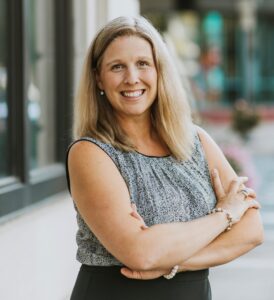 Jennifer Joyce is an experienced real estate professional specializing in Texas. Fund Management and Asset Management span over 20 years performing various real estate investment activities. Jennifer started with single family investments and then transitioned to commercial real estate in 2007 with emphasis on large value-add opportunities.
She has an excellent reputation building relationship with brokers, professional services, investors and vendors. Puts a great amount of focus into building a team to acquire and operate properties. Dedicated to providing transparency, well thought out business strategies and financial reports to her investors. Great promoter of community development activities that take pride in safe and livable solutions. Philanthropist in helping cities and veterans with homelessness.
Ready to plan your early retirement?
It all starts with passive
income. Apply to join
the Sterling Rhino
Capital Investor Club.
Already working with us?
Welcome back.