

Investing In Real Estate From 6,000 Miles Away With Jon Gorham

Did you know you can invest in real estate from 6,000 miles away? Chris D. Roberts welcomes Jon Gorham, an assistant professor at a private university in Tokyo. Jon shares his journey to financial independence with Chris. Graduating with a considerable student loan on his back, he made his way to becoming a teacher in Tokyo. But there’s an earning ceiling if you work in English language schools. So he had to discover ways on how to expand his income. He started reading Robert Kiyosaki’s famous Rich Dad, Poor Dad, which inspired him to invest in real estate. Do you want to start investing in real estate? You wouldn’t want to miss this episode. Tune in!
—
Listen to the podcast here:
Investing In Real Estate From 6,000 Miles Away With Jon Gorham
We are here with Jon Gorham. He is going to tell some amazing stories about how he got into the investment space, talk a bit about his career, and he will be sharing his story with us from Japan, which is an awesome story in of itself.
—
Jon, share with us a little bit about your success. Success is defined in different ways by people. It’s not about money or building businesses. It could be anything, one thing that you attribute to the success you’re having and maybe how the readers could utilize that experience you have to help them with their success journey.

Miles Away: Don’t be afraid to take chances. Sometimes, it just takes a circle of someone in your circle of influence to push you a little bit.
First of all, I want to say thanks for having me on your show, Chris. I appreciate that. One thing that I noticed with a lot of the podcasts that I listen to and YouTube videos that I see with these FI, Financial Independence themes is that everyone is already financially independent. I was thankful that you would have me on here because I’m still on that journey. I started my investing career back in 2018. I graduated from college in 2001 and I started to go through the motions. I wasn’t focused on paying off any student loan that I had.
I went to a private school, so it was pretty expensive. I graduated with a bunch of student loan debt. I thought that was normal for people to have. Half the people that graduate from college with student loan debt. I figured that’s normal to have that stuff. I put that into deferment and it was accruing interest, which is so stupid. I grew up in the Midwest and I moved to California. I moved out to San Diego right before the real estate crash in 2008. I was out in San Diego when all of that stuff was going on. I talked to one of my brothers who lives in Tokyo, Japan.
I met with him when he came to visit California. He was like, “You should come to Tokyo. This is going to be great. Come and teach. It’ll be fun.” I’m like, “I don’t know. I could go for a couple of months. It might work.” He was like, “You got to sign up for a whole year. See how it is. It’s a fun city.” I took it. I was like, “I’ll go ahead. I’ll do it.” I booked a flight because my lease was about to run up as well in San Diego. I’ve been here for many years in Tokyo. This is where I met my wife and we got two kids. We purchased our house here as well in Tokyo. Without going into too much detail specifically about my investing career, which I’ll talk about a little bit later. That’s my timeline for getting out to Japan.
Charging Forward Crew, what I want you to take away from that is we all live in a bubble and oftentimes, we run away from the unknown. I was listening to your story and I was thinking of leaving San Diego to go to Bakersfield or Southern Oregon. It’s not a far cry, but to go across the pond and Japan and then stay there for many years, takes some grit. That’s scary and pretty tough. It’s a new language and everything else and you settled in nicely. The lesson here is don’t be afraid to take chances. Sometimes it takes someone in your circle of influence to push you a little bit.
When I was younger, I took a good friend of mine to encourage me to move 1,200 miles away. It was pretty scary at first, but then I realized once I got to the other side of that and planted my roots, it was the best thing I could’ve ever done. It changed my life completely. You’ll never know. Monday morning quarterback, if it would have been different but based on your success and the chances you took, it sounds like you’re doing all right.
The lesson is don’t be afraid to take chances. If you fail, you got get back up and go again. Let me ask you this, Jon. The readers know about your history from San Diego to Japan. We don’t know exactly what you’re doing over in Japan and where that led you. Share with us a little bit about what you’ve been doing there and then where you are now and what’s next for you?
Going from San Diego to Tokyo, Japan, you’ve got to start with this. Most of the foreigners that come into Japan started off as English teachers. There is a JET program. It’s an entry-level. Someone who just graduated from college can come over here and teach English. I did a similar thing. It’s called an Eikaiwa. It’s an English language school. I came over and worked for a private Eikaiwa for my first couple of years. You can only make roughly about $30,000 a year. I don’t know what it is now. I was only making that. You get stuck. There is that ceiling there if you just work in these English language schools.
I started talking to some different friends who are doing this same gig and to my brother. He was like, “Why don’t you get your Master’s degree?” You don’t need a Master’s degree to teach in a high school. I started teaching at a private high school and then started going for my Master’s degree learning online. You can get your degree online here. I started doing that and then networking at the same time with as many people who are already teaching at the university level. Once you start to know and network with enough people who are at the university level, that’s where you want to be because it’s better money.
Mainly the students are there because they want to be in university. They’re not there because they’re forced to be there. I went ahead and got my Master’s degree and almost immediately, I sent out to as many friends as I could and within my network. I said, “I just finished this program.” Immediately, I was hired for a job that snowballed into talking to other people and then there was a new college within the university right down the street from my house. They opened up this new college and they were looking for a full-time assistant professor. I said, “I’m ready to do this.” It’s been a great journey here to get to this point, from working in an English language school on up to being an assistant professor.
At this point, I’m looking at finishing off with a PhD. I’m looking for programs to enter into, which would be about a 4 to 5-year program and then I could get into an associate professor or full professor job if I wanted to do something like that. It’s been a long journey. You can’t come straight over from San Diego or wherever you’re from and jump right into teaching at the university level. You need to have about three years of experience teaching at the university level.
During this whole time, I started my own Eikaiwa with my brother. We started up our own business and that’s still running. I stepped aside from that because it’s so much travel and time that it took. Now that I’ve got a family and everything, I didn’t want to deal with it. That’s another option, too. There are plenty of people who want to start their own business. That’s a possibility as well. If you wanted to do that, you can.
Don’t be afraid to take chances. If you fail, you just got to get back up and go again.
You were in San Diego and you had school debt. About how old were you when you were there when you left?
I was 27.
You go to Japan. Comparable to dollars, you were making $25,000 to $30,000 in Japan. How is the cost of living in Japan versus San Diego? I know San Diego is pretty high, but relative to the money you were making, is the cost of living less? How does that work?
It all depends on where you live. I lived in the city, in Tokyo. It was about $700 a month for rent. Food is a little bit more expensive, but you’re also not driving, especially in Tokyo. If you live outside of Tokyo, I think you need to have a car or some form of transportation. I would take a train and that’s paid for by my work. I eliminated that expense. I haven’t had a car payment for the past years. I don’t pay for gas or anything like that. That’s a huge expense that you’re taking away. Those insurance, gas and if you do have a car payment. In general, it’s a lot cheaper than California.
Another big thing is health insurance. The first year that you’re here, it’s based on how much money you make is how much you pay for health insurance. If you don’t have any income from year one or if it’s low, you pay less than $10 a month for health insurance. That’s gone up because if you start to make more money, then you’re going to have to pay a little bit more.
That’s been a huge thing for me that I don’t think is talked about at all, especially in the States is how much health insurance costs. It’s been a huge thing for me with my family because now that I worked for a university, it comes directly out of my paycheck. It’s significantly less expensive than if I were living in the States and paying for my whole family to have private health insurance or any health insurance.
I find that interesting because I have a friend who came to this country, the guy with the stick, bag, clothes, $5, no language and the whole thing. He is the guy you’ve heard about. He was such a hard worker. He was here. He built businesses, retired and had several million dollars. Ironically, he went through a divorce and had a girlfriend who also had a successful business who sold it. Now they travel the world. Here is what’s interesting that parallels with what you said. We were talking about insurance one time and he texted me the amount of money he was paying. He said, “Each one of them pays $150 each,” and they have worldwide coverage.
The only place they are not covered is in the United States. He said, it’s similar coverage to what you might have, but a lot of it is the malpractice insurance and things like that. Nothing against the United States, I love it. The best country in the world, in my opinion, but there are some exorbitant costs with medications. I find it interesting that you take this chance. You’re making entry-level income at that time, maybe a little higher. You go over there and take this chance and you lower your travel expenses. You go over there. It was quite a bit of debt, but you find that there are some surprises there as well, like keeping low health insurance.
I can relate because I’ve heard these stories from other people as well like, “You won’t believe in Mexico what it’s like.” Sometimes it may not be the best care or you may have to wait a while, but relative to what we pay, as long as people aren’t dying, you’re going to be okay to get. Your tooth removed or whatever you need to do for $8 versus $280.
Japan is not a third-world country. We’ve got a top-notch healthcare system. One of my kids had to go to the hospital and so my wife called the ambulance. I’m thinking as an American, I’m like, “This is going to cost, I don’t know.” I started Googling, “How much is an ambulance? How much does it cost?” There are some horror stories on there. People getting charged $15,000 to $20,000 for an ambulance ride. I’m thinking like, “This is going to be pricey, but it’s my kid. It doesn’t matter.” When she came back with our son, I was like, “What’s the damage? How much is this going to cost us?”
It was $10 because we had to pay for his food while he was there. I’m like, “Are you serious? You got to be kidding me.” She was like, “Yes.” Kids from the time they’re born until they’re fourteen are completely covered under our health insurance. Any surgery is completely paid for. I’m like, “That is amazing.” I started looking at that side of it. I look online and all the horror stories about people having to sell their houses and stuff like that and going bankrupt because they come down with some disease. It’s amazing to me. I hope that the States comes around and starts to have some form of affordable health insurance. I think it’s important.
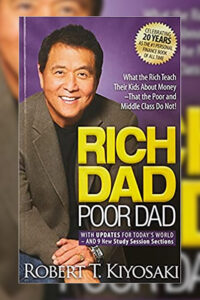
Rich Dad Poor Dad: What the Rich Teach Their Kids About Money That the Poor and Middle Class Do Not!
It’s a huge challenge in our country. There are so many wonderful things about living in the US, but there is room for improvement everywhere. It’s all good. Thanks for sharing that. With regard to where you are, you went through some challenges when you were a little bit younger, you’ve made some successful moves as you’ve built and pivoted. Working as an assistant professor is what you do at the university, which is great. I don’t know if you have plans on coming back, but I’m sure they love having you there because you’re an articulate guy. That’s cool that you’re out there making a difference in teaching.
How did you pivot and shift into the multifamily or investment space? You went from a position of being in debt and having financial challenges and take chances to gain some clarity through your education, life experience or time. Now, you’re an investor and you’ve learned a lot along the way. Why don’t you tell our readers a little bit about that journey?
I had a big turning point. My a-ha moment was back in 2018. I took my family back to visit my folks in Illinois. We would always rent an Airbnb. When we went back there and I was like, “Let’s go out to eat.” We’re booking restaurants every night. My mom, on the phone, was like, “We can’t afford to go out to eat every night. It’s too expensive.” They’re retired. I was like, “Fair enough. I understand. What’s your budget look like? What should we do here?”
She didn’t want to say it. I went over to their house the next morning and brought my laptop with me. I never set up a budget before, but I’m like, “Google, how do you set up a budget?” There are some spreadsheets you can find tons of stuff online. We went line by line. I was like, “Let’s enter this stuff in.” I was like, “You’re right. You can’t afford to go out to eat.” My dad worked for the government. He owned his own business. He got a PhD. He is a licensed architect. My mom was a school teacher for many years. It wasn’t like we were poor growing up. We’re a regular middle-class family but they didn’t invest at all.
I’m like, “How much do you have invested?” They said, “We don’t trust the stock market.” It was one of these things like, “What’s going on here?” As I looked at their budget line by line and that was like, “I don’t want to end up like this. I don’t want to be in my 70s going like, ‘How the heck am I going to take my family out to eat?’” It was eye-opening for me at that point. By the time that I was ready to come back to Japan with my family, I was at the airport and Googling, how to start investing. The main ones that come up are Dave Ramsey and Robert Kiyosaki. I’m like, “I’m going to look around for the O’Hare bookstore.”
I was looking for stuff. I couldn’t find what I was looking for, so I went on Audible and I downloaded Rich Dad Poor Dad. I listened to that on the plane ride home because it was a nighttime flight and everyone was asleep, so I’m listening to this thing. I’m like, “I’m ready to go.” That was my very first introduction to investing, listening to Robert Kiyosaki’s Rich Dad Poor Dad. From there, I started reading more and more books. I got into Tony Robbins’ MONEY Master the Game. It’s a good book. From there, it led into Dave Ramsey and I’m like, “I got to do this.” It’s time to get out of debt.
There are these simple baby steps that you can take to get out of debt and to start investing. I thank my wife for helping me out with this too, because she was like, “You’ve got student loan debt still?” She didn’t know about this. I’m like, “Everybody has got student loan debt. What do you mean?” She was like, “That’s not cool. Run.” That was one of those things. I hammered that student loan debt and it took a couple of years to get that out of the way. One thing that was strange to me was that when I paid that off, I remember calling the loan department and saying like, “This is my final payment. I want to make sure that everything goes through properly.”
The lady on the phone is like, “Are you sure you want to do this? It’s going to affect your credit score negatively.” I’m like, “It doesn’t matter. I want this off my record. I do not want to have any debt.” Oddly enough, it did knock down my credit score twenty points, which is weird. You’re penalized for paying off debt. I didn’t understand it, but I was glad to get out of that. I was like, “What do I do next? Now that I’m out of debt, what’s the next step, save up 3 to 6 months for an emergency fund?” I got to that point of trying to save up for an emergency fund and then COVID hit. Once COVID started, I’m like, “Maybe you should do more like a year. We don’t know how long this is going to last.”
We’ve got a full year’s worth of expenses saved up in cash. It’s completely liquid. From there, it’s like, “What’s the best way to start investing here?” All the books that I’ve read about investing like the JL Collins, Vicki Robin’s Your Money or Your Life. It’s all about like, “Go with Vanguard. It’s simple index fund investing and that’s the way to go.” I started a Fidelity account because that’s the easiest one. As a US citizen living abroad, it’s a little bit more difficult to get in with Vanguard. I opened up one of those accounts and then I started talking to some friends at my university who are also investing.
I’m like, “A lot of people are doing this, too.” It was cool. That snowballed into me starting up my private Facebook group, Investing from Japan. From starting that one up, I did that with one of my friends, Daniel, who is on the BiggerPockets Money Podcast. If you look up Daniel Mills, he talks about investing from Japan. His big thing is investing in real estate. I’m like, “I got to contact this guy.” He is a few hours away from me. He started telling me about what he was doing. He was investing in real estate in America and went through his whole process with me. I’m like, “Let’s get this Facebook group going.”
I’ve met so many other teachers, lawyers and business owners that live in Japan that is also investing in the States. From there, I started finding out about syndication. I can invest passively in multifamily from abroad and I don’t have to worry about the toilets, tenants and everything like that. Within my group, I started talking to other people about who are in syndications and then this one guy said, “You got to talk to Chris Roberts. He is with Sterling Rhino Capital.” I looked it up and then I called you and introduced myself. I found out that you’ve got to go through 506(b).
Save up for an emergency fund.
You got to get qualified and make sure that we build a relationship and all that.
As a non-accredited investor, you got to have $1 million in net worth and you got to make over $200,000 a year. I’m not quite there yet, but if you’re a non-accredited investor, you’ve got to introduce yourself and talk with the general partner. I started talking to a few different syndicators and Chris, you were the first one that I talked to that you seemed interested in my whole story. I went from having debt and being in the red to having zero debt to having an emergency fund in 2020, investing in index funds, and started up investing in my first syndication. I’ve already set the timeline to set up for my next indication to invest. That’s my investing timeline.
There is such a valuable lesson here, and it starts with the debt, taking the risk, and the chance of going to a new place and starting something. Also, being open to educating yourself in learning and a life experience, which is so incredible. Your parents are not unlike probably the majority of the population. I come across folks all the time that lived in a different generation and it was a couple of bucks under the pillow. 401(k)s weren’t even introduced until the ’60s.
There are different mindsets. With technology and access to information, we are progressing in the options a lot faster than previous generations because they didn’t have access to what we have access to. What I love about your story and I want the readers to pick up on is it took a circumstance in life, a dinner with a family member that opened your eyes to the opportunity and scared you enough to make you realize that you had to make a change. It was great. You had to wherewithal to go and pull out or look up spreadsheets because I did that a long time ago as well. It’s not taught in school.
Even my first financial advisor I hired just talked to me about the stock market. He didn’t talk about real estate at all. He didn’t give me lots of options. He said, “I’ve been doing this for many years. Trust me. If you do this, you’re going to be able to retire when you’re 178 years old with $6 a month.” I’m like, “That’s crazy.” Fast forward, I did a lot better in real estate. You invested with Sterling Rhino Capital. We appreciate the accolades. We do care, by the way. We love hearing the stories from people because we have all been in a position where we wanted to learn more and it’s about helping people.
We all want to help each other. What I love about your story is you took an opportunity and you did something with it. What’s exciting about that and what I want the crew to take away is, you have to start measuring things, so that you can grow. Otherwise, you’re going to build up debt and you’re getting in trouble. You are never getting caught up because interest rates aren’t going down. They’re going to continue going up, especially as your debt builds. Don’t worry about the credit score. You get dinged oftentimes because they want to see the payments.
If you don’t have a lot of regular payments, they can’t rate your credit score, so they want to see some payments. It will kick right back up. You educate mom and dad. You go and build up savings funds. Kudos to you because most people don’t have a savings fund. Most Americans, on average, have $500 in their savings account. They can’t handle a catastrophic event. It’s terrible. It’s my goal in life to educate as much as I can for free. I don’t charge for this stuff. We get on calls. We meet up with people. We talk to people. We provide an opportunity, even in conversations, not just investing with us as a group. I love what you did there and please keep sharing that messaging.
You got the savings account, which is a pretty good chunk of change. You found the multifamily space and, for whatever reason, realized that you didn’t want to be in the stock market. You wanted to be in a multifamily. Can you talk a little bit about maybe why you chose that vehicle to invest in? What made you go down that path? There are options. You said you were in the Vanguard or low funds. I took a similar path. Can you share that with me? What led you down the multifamily path aside from just hearing about it?

Miles Away: Don’t overcomplicate things by investing in individual stocks.
I should clarify that I do have my Roth IRA. It’s VT. It’s the Total World Stock Market. I put the money in there. I don’t check it every day. I’ll check it once a month to see how things are going. I do still have that index fund as part of my investments. Growing up, when my family and I moved from our first house into our second house, my mom and dad kept that as a rental property. Every summer, I used to have to go over, and I’d have to clean out all the crap because we lived in a college town at the University of Illinois.
My parents would always rent out to college students, and they would trash the house. My parents were like, “We kept the deposit.” We’d have to repaint everything and clean all this stuff out. I hated doing that stuff. My dad was like, “This is what’s going to pay for part of your college.” We had rental properties. I saw what it was like. It was about 2006 when the property values started to skyrocket. At the time, they sold the rental property. It’s still being rented out to this day. That’s the thing. They could have kept it. It was completely paid off. It would have been a cash cow for many years.
They could have done a 1031 exchange and kept building it up, and they could have gone a completely different path. Another thing that I remember specifically was in around 2000 or 2001, I went to go visit my grandparents. My grandpa used to be a banker. He was complaining about how his stocks plummeted. Someone had convinced him to invest in Cisco, I don’t know if he was in Enron. He lost a lot of money. I remember him having a conversation with my dad while we’re out fishing. He was like, “I’m not going to trust the stock market at all anymore.” My dad was like, “It’s a total scam.”
That’s the stuff I remember, these limiting beliefs. If you had been invested in index funds over a long period of time, it’s not even done anything. Continue to invest like that, my parents would be okay. If they would’ve kept the rental property as well and snowballed that into other rental properties, they would have been fine. Those are things that were always in the back of my head. I knew my grandpa got ripped off. How do you not get ripped off in that way? My parents didn’t like dealing with toilets and tenants. How do you not deal with toilets and tenants? Those are all things that I was thinking about.
Talking to some of my friends here in Japan and then talking to Daniel, who I started up a podcast with about how he is investing from Japan in American real estate and how you can get in passively. That’s where I want to be. I’m trying to get one syndication per year and then the rest of that’s going to go into maxing out my Roth IRA. Once that’s maxed out, I’ll start up on my next indication. That’s my very simplified path here with investing. I don’t want to over-complicate things by investing in individual stocks. I would like to get into real estate as an actual owner of a door or two here, but I don’t feel that comfortable investing from abroad without it being like a passive investment like multifamily syndication.
Those are great goals. The key is, for example, when you were younger, you’re ambitious and doing all these things. You start getting a little bit older, you have a family of priorities, things take your attention away and it becomes hard to focus on anything other than the bubble we’re in, which is getting the kids to school. I got a health issue. The wife is upset about something. Husband is upset about something. We don’t spend an awful lot of time investing and educating ourselves and finding ways to keep us inspired. That’s a fascinating thing I find when I talk to people. I ask this question, how do you stay inspired?
How do you stay motivated? There are different things. You mentioned Tony Robbins. He talks about that. I’ve been to many of his events. He is a great guy. He does some great business seminars, too. Not just the dancing on cool stuff. He has got some good educational stuff as it relates to business. It’s getting out of your own head and maybe taking an hour or two that you’d normally be dedicated to watching the Family Guy or whatever reruns you watch and putting that time in yourself, whether it be Robert Kiyosaki or anyone else. I’m an avid reader and podcast. Anytime I have free time and I’m on the road, gym or plane, it’s audiobooks and podcasts. You can get a free education.
That is where you find those little nuggets of knowledge that you start applying and can significantly change your life. You mentioned the dinner and then a friend who mentioned multifamily because my epiphany came when a buddy was at dinner with me. We were talking and he was talking about rentals. I had landed a little bit. I had stocks, but I never understood the power of the passive cashflow model. I read and started researching. I did the same thing. I love that you’re on this journey and that you’re going to find whatever level of success you want in the space because you’ve realized the power of that passive cashflow investment and you’re continuing to educate yourself.
I love what you’ve done where you guys are doing the videos and you’re starting to educate others. That’s empowering and helpful because others will start to resonate with you and be drawn into you guys as well. If you can come up with that model where you help people invest from overseas, the next thing you know, you’re on a deal and earning your general partnership. You paved your own way. I’m proud of you. I’m excited for you. You’re going to be successful even more. Congrats on getting the degree and taking a leap to move over there.
Being in Japan, it’s different. You’ve been there a long time, but it’s different. You have challenges when you have family in the US. You’re all the way over there, you’re trying to build this business and you’re doing these other things on the side. It’s a lot. You’re hustling. You’re working hard. The kids are a whole other full-time thing, regardless of what your wife does. She is full-time, too with the kids. What do you do to stay inspired or motivated? How do you do it every day? Do you have a place you go, a mantra you say or a place you physically visit? How do you stay on track?
Constantly read, listen, and watch YouTube videos that motivate you.
I want to get a takeaway from every single book that I read. I keep a Google Drive folder with all the Google Docs from every book that I’ve read, and I’ll speak up my notes if I see something important that I see in the book, so that way I can always revisit that at a later time. I try to take some main points from every single book and implement that into my life. There is one book that it’s the easiest book you could probably read. It’s by Hal Elrod called The Miracle Morning. He talks about SAVERS. It’s Silence, Affirmations, Visualization, Exercise, Reading and Scribing. Every single morning I wake up early and practice ten minutes of mindfulness meditation, just sitting there silently.
I’ve got an affirmation journal that I keep and I revisit that every morning and at night. After I drop my kids off at school, we’ve got this wooded area. It’s a great place to go out for a quick walk in the morning to clear your mind and visualize what your day, week, month or year is going to look like. I get a little bit of exercise. I read for 10 to 20 minutes in the morning and then I write down what I want to do for that day. I keep a journal.
We’re nearing the end of 2021, so I keep a journal and revisiting what my goals were for the year. I revisit those goals in July, the end of June and about six months. I also set up monthly goals as well that I revisit every month and weekly goals. I make sure that I check those boxes. I don’t hit those every time, but it’s what keeps me motivated. It’s something that I’ve done with that book. That’s the one I could recommend for anybody. It’s super easy to read. It’s something I’ve used every single day. That’s how I pretty much keep motivated. My kids and wife, I got to give them a shout-out as well.
Charging Forward Crew, what I want you to take out of that is you need something that drives you. When you read a book, he doesn’t lay around and forget what was in it and think it was a great story. He kicks something out of it and he makes notes. He goes back and remembers and uses those little nuggets to keep him fired up and motivated. Also, do a little meditation and clearing your mind. It’s all good stuff. Thank you so much for sharing that. I can relate to some of that. Jon, tell the readers where they can find you or connect with you.
I’ve got a YouTube channel that I started up at the beginning of COVID. It’s called Education Solutions Online. If you want to follow me on there, especially if you’re an educator or interested in educational technology. I also started up a new podcast that we haven’t launched. It’s called Expat FIRE Club. I’m doing that with my partner Daniel. We’re interviewing different investors from all over the world. If you want to follow us on Expat FIRE Club, we’ll have that coming up.
Thank you so much, Jon. It’s been a pleasure. Folks, if you like the show, please check us out on iTunes. Write a review, rate us and tell the world so we can share the message.
Thank you.
Important Links:
- Jon Gorham – Instagram
- Rich Dad Poor Dad
- MONEY Master the Game
- Your Money or Your Life
- The Miracle Morning
- Education Solutions Online – YouTube
- Expat FIRE Club – Apple Podcasts
About Jon Gorham
 Jon Gorham has a master’s degree in Educational Technology and he currently works as an assistant professor at a private university in Tokyo. His interests include virtual & augmented reality classroom applications as well as teaching 21st-century skills to Japanese students. Recently, besides investing in his first real estate syndication with Sterling Rhino Capital, Jon has been producing online courses and YouTube videos in order to improve ICT skills for Japanese students and teachers during the pandemic.
Ready to plan your early retirement?
It all starts with passive
income. Apply to join
the Sterling Rhino
Capital Investor Club.
Already working with us?
Welcome back.